

In Ethiopia, public sentiment about the country’s overall direction under Abiy Ahmed has changed drastically over the past 3 years, according to a new survey and report by Afrobarometer.
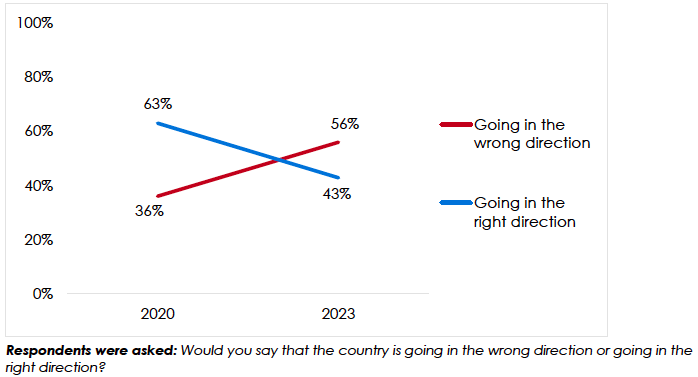
A majority of adult citizens, 56%, say Ethiopia is heading in the wrong direction, up by 20% since 2020 (36%) (Figure 1). A direct consequence of a mismanaged economy, inability to meet basic necessities, and lack of peace and security. Regarding the most important problems the government must address, the top 5 concerns of citizens are: 1) the economy; 2) basic needs (water supply, infrastructure/roads, electricity); 3) civil war/political violence; 4) unemployment; and 5) crime and security. All clear indications of poor governance.
Figure 1: Overall Direction of the Country (2020-2023)
Ethiopia’s Mismanaged Economy is in Free Fall
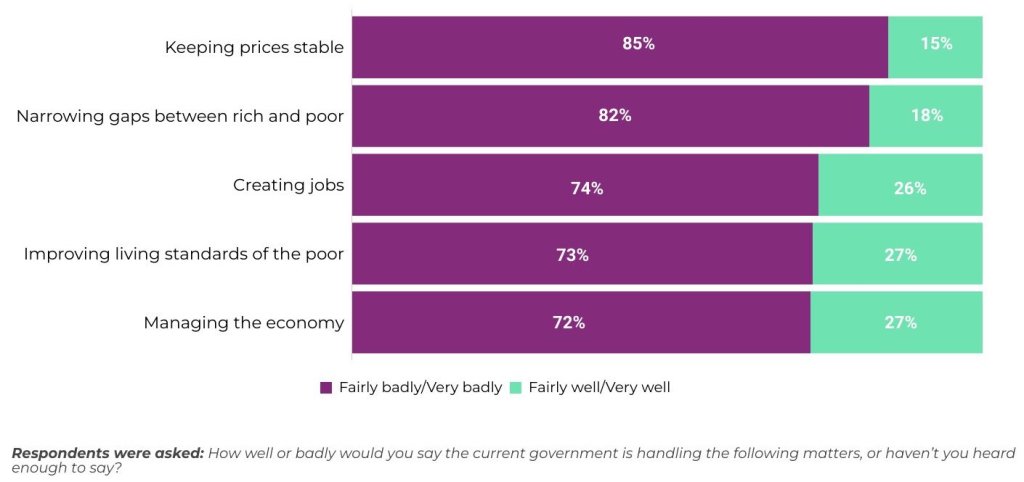
The top concern of Ethiopians is the management of the economy—an economy mismanaged since 2018. In this regard, an overwhelming majority of citizens, 72%, disapprove of the Abiy regime’s management of the economy—viewing its performance on economic management as poor with regards to: keeping prices stable (85%), narrowing gaps between rich and poor (82), creating jobs (74%), and improving living standards of the poor (73%) (Figure 2).
Figure 2: Evaluation of Government Economic Performance in Ethiopia (2023)
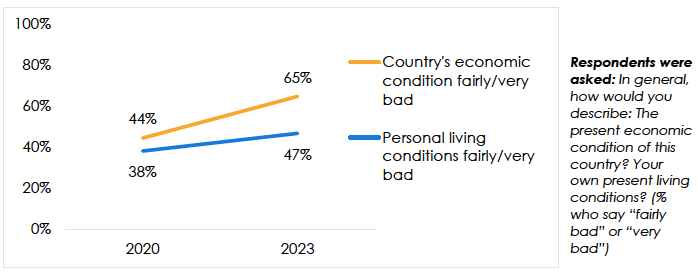
Furthermore, on the economy, approximately two-thirds, 65%, of citizens describe Ethiopia’s economic condition as “fairly bad” or “very bad,” a 21% increase compared to 2020. Similarly, close to half, 47%, say their personal living conditions are bad, up by 9% (Figure 3).
Figure 3: Negative Assessments of Economic Condition in Ethiopia (2020-2023)
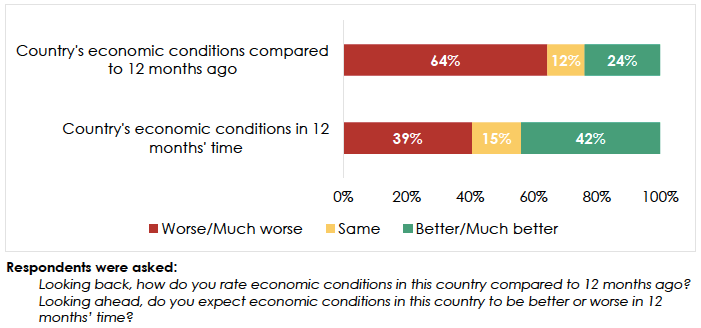
Finally, almost two-thirds, 64%, say Ethiopia’s economic conditions have worsened over the preceding 12 months. And they are not optimistic about the near future, as only 42% think things will get better during the coming year, while 54% expect them to get worse or stay the same (Figure 4).
Figure 4: Retrospective and Prospective Assessments of Ethiopia’s Economic Conditions (2023)
Underlying Factors
The overwhelming level of disapproval expressed by Ethiopians regarding the direction and management of the economy is noteworthy, albeit unsurprising. Since 2018, Ethiopia’s shock and debt-laden economy has been in free fall. The lack of political stability and the proliferation of armed conflict have been major shocks to an already fragile economy. In addition, the combination of exorbitant inflation due to loose monetary policy, indebtedness, chronic foreign exchange shortage, lack of economic productivity, and high levels of unemployment, poverty and inequality have crippled the economy.
Consequently, in July 2024, the myriad economic challenges forced the Abiy regime to sign an IMF bailout loan of $3.4 billion dispersed over four years. The IMF’s structural adjustment program for Ethiopia, and its conditionalities, include debt restructuring, cuts to government expenditure on social programs, liberalization of the exchange rate regime, privatization of state assets, trade liberalization, and capital market liberalization.
In theory, these prescriptions are thought to reduce government expenditure and the debt burden; but in practice, the effect is to squeeze the poor—72% of Ethiopia’s population. The economic consequences of a weaker currency, high inflation, and less social programs and subsidies due to austerity measures will be felt most by the least well-off in Ethiopian society—exacerbating poverty and inequality.
In other words, in the short and medium term, the Abiy regime’s policies will exacerbate poverty and inequality. This will in turn create greater levels of social discontent and civil unrest. This process is currently underway in Ethiopia. And public sentiments are beginning to reflect these realities.
Poverty is on the Rise
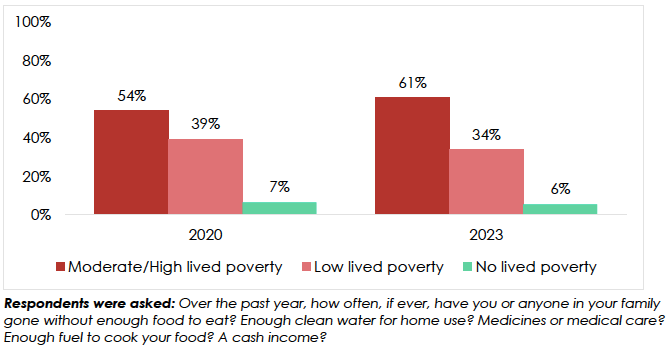
Another noteworthy and troubling development captured by the Afrobarometer survey is the rising level of poverty in Ethiopia. As Afrobarometer’s Lived Poverty Index illustrates, 61% of Ethiopians experienced moderate or high levels of lived poverty (frequent deprivation of basic necessities), a 7% increase compared to 2022. At the same time, 34% experienced low levels of lived poverty. Only 6% managed to escape lived poverty (Figure 5).
Figure 5: Lived Poverty Levels in Ethiopia (2020-2023)
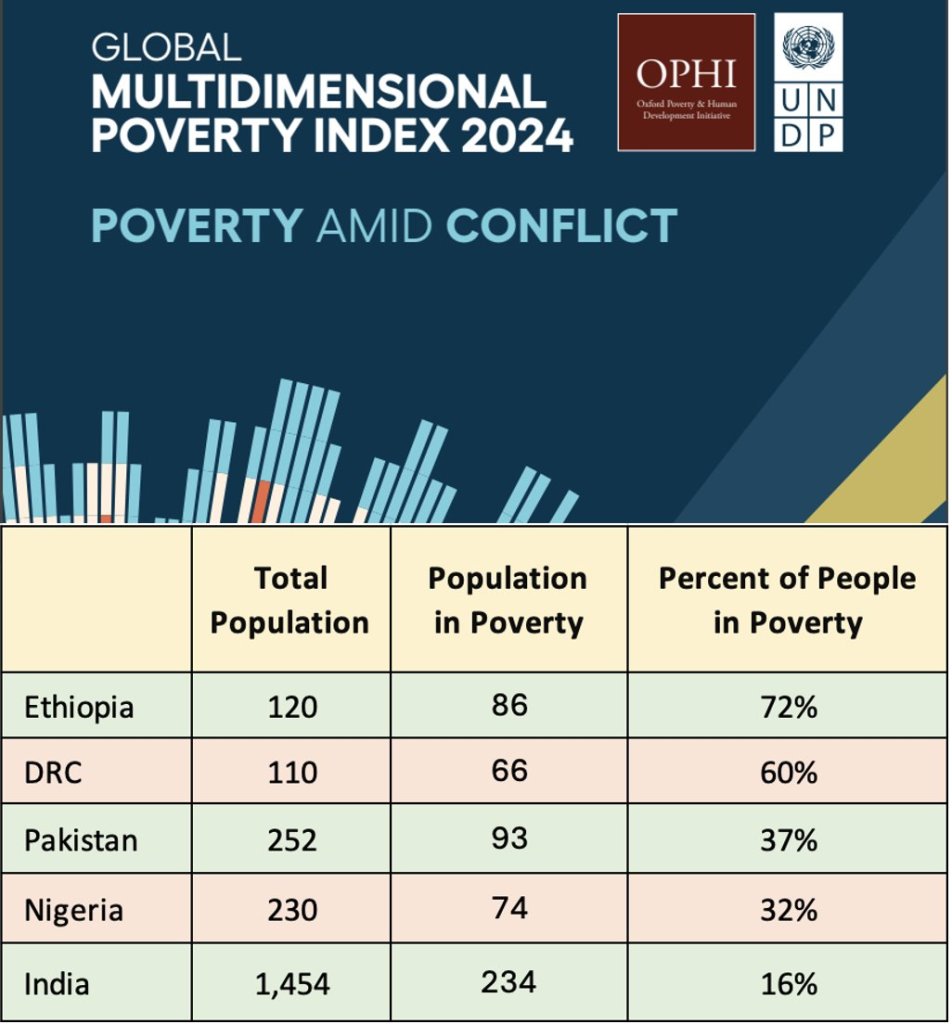
The increasing poverty that Ethiopians are experiencing is also captured by the recently released Multidimensional Poverty Index 2024. According to the Multidimensional Poverty Index, Ethiopia’s population that is multidimensionally poor increased from 68% in 2019 to 72% in 2024, with an additional 18% susceptible to multidimensional poverty. Furthermore, of Ethiopia’s 120 million population, 86 million are in poverty—a staggering 72%—the highest percentage of a population in poverty in the world. Furthermore, of the 86 million people in poverty, 50% are children (Figure 6).
Figure 6: Countries with Highest Level of Poverty
The cascading socioeconomic challenges in Ethiopia and its accompanying social discontent—meticulously captured by the Afrobarometer survey—are unsurprising to close and discerning analysts of Ethiopian affairs. As some have comprehensively presented and convincingly argued, “Abiynomics has demonstrably proven to be non-strategic, misaligned, confused, and socioeconomically ruinous.”

 Ethiopian Policy Institute