
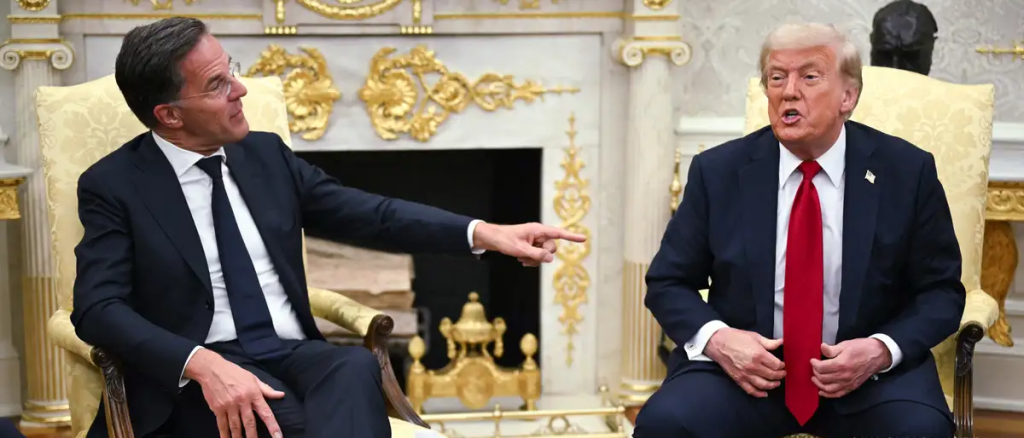
United States (U.S.) President Donald Trump, has recently made controversial comments about the Grand Ethiopian Renaissance Dam (GERD), while showing great interest in intervening and mediating between Ethiopia, Egypt, and Sudan.
President Trump raised the issue during a recent meeting with NATO Secretary General Mark Rutte at the White House on July 7, 2025. At the same time, Egypt has made overtures to U.S. Senators to discuss, and possibility intervene, in the matter.
What role could President Trump and the U.S. play in the ongoing standoff and potential negotiations between Ethiopia, Egypt, and Sudan? Deutsche Welle (Amharic) spoke to Ethiopian Policy Institute’s Biruk Haregu, Professor at James Madison University, about the recent geopolitical developments.
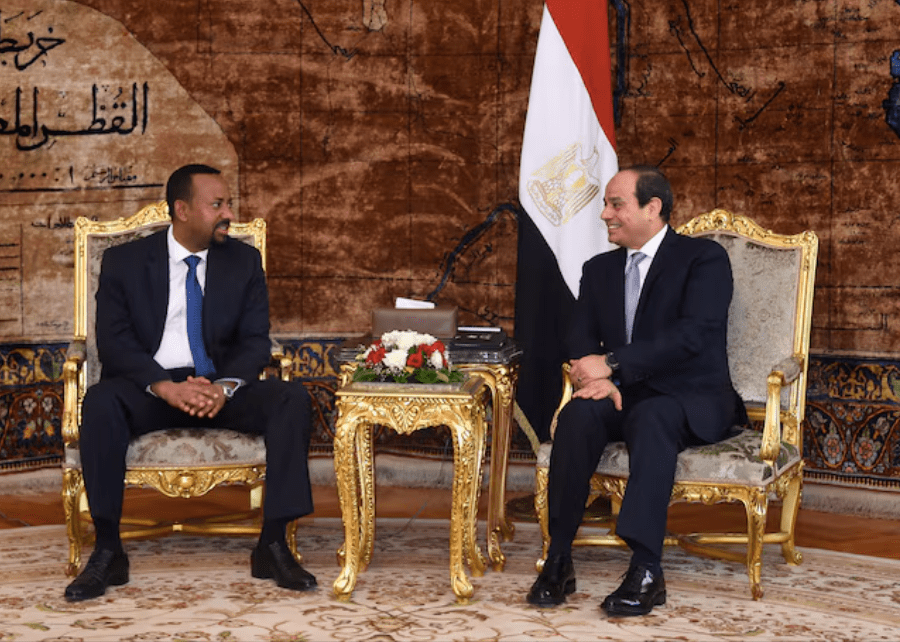
Addressing the latest geopolitical developments, Professor Haregu explained that the intention of President Trump appears to be to inject himself into the GERD issue with the aim of reigniting another round of negotiations between Ethiopia, Egypt, and Sudan. While President Trump’s previous effort at mediation failed — during his first administration — there is a clear desire to revitalize that process, likely at the behest and insistence of Egypt.
Professor Haregu also detailed the deep ties between President Trump and Egypt, including campaign contributions, state dinners, weapons sales, and Trump’s reference to Al-Sisi as “my favorite dictator.” Through both official and unofficial channels, there is compelling evidence that Egypt is attempting to use U.S. power and influence to put pressure on Ethiopia.
Regarding Ethiopia’s current position and approach, Professor Haregu indicated that Addis Ababa is in a position of strength — Ethiopians raised the funding for the GERD, the GERD is now complete, operational and generating electricity, and there are no adverse effects to downstream countries. Moreover, an international panel of experts has attested to both the safety of the GERD and the fact that there will not be a reduction in water flow to downstream countries. Therefore, the Ethiopian position is one of significant strength.
In this context, however, it is critically important for Addis Ababa to strengthen its diplomacy in order to effectively frame and advance its position; while at the same time, addressing challenges that could arise in a timely and accurate manner, including Trump’s erroneous statements.
To this end, several concrete actions can be taken. For example, diplomatic statements should be delivered by the appropriate Ethiopian agencies and officials (Ministry of Foreign Affairs, Office of the Prime Minister, Press Secretary, etc.); the Ethiopian public should be privy to accurate and timely information vis-à-vis the GERD; and transparency and accountability should be upheld. Otherwise, uncertainty, misinformation, and speculation could undermine public confidence, cautions Professor Haregu.
Finally, as the GERD is now complete and operational, it is critically important for Ethiopia to prioritize domestic socioeconomic development objectives such as increasing electrification of households and firms, and providing ample electricity for manufacturing and industry; rather than a wholesale focus on exporting electricity to other countries or selling electric output to crypto currency miners. The priority must be the needs of Ethiopian citizens, 60% of whom do not have access to electricity, explains Professor Haregu.
***
Editors Note: The original interview was conducted in Amharic, published by Deutsche Welle (Amharic), and prepared by Eshete Bekele and edited by Tshehai Chane of Deutsche Welle.

 Ethiopian Policy Institute