
Book Author: Mussie Delelegn, PhD
Book Reviewer: Taffere Tesfachew, PhD
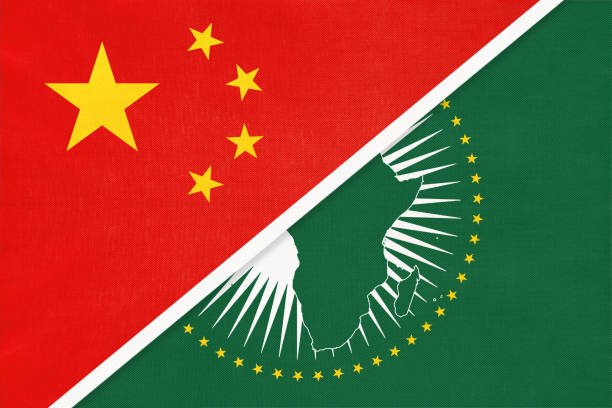
For the last three decades, especially in the post-Structural Adjustment period, African countries have demonstrated renewed political commitment to economic diversification, structural transformation and industrialization. In more recent years, this has been driven by a stronger commitment towards regional trade guided by the Africa Continental Free Trade Area (AfCFTA).
For policy lessons, in the past, African countries looked towards the traditional donors in the west, in most cases former colonial masters. This began to change over the last two decades when newly industrialized countries in East and Southeast Asia emerged as alternative role models and examples on how to achieve sustained and high-level economic growth, rapid poverty reduction and accelerated industrial development. The fact that some of these Asian economies were low-income and underdeveloped like most African countries just over four to five decades ago heightened the interest and curiosity of Africans to know and learn how and why these countries were able to radically transform their economies within a short period.
This shift in Africa’s interest and economic relations towards the East, particularly China, was not missed or taken lightly by observers in the traditional development partner countries as demonstrated by a plethora of commentaries and publications that emerged, most of it underlining the exploitative and unequal nature of Africa’s new economic partnership.
The pertinent question are: to what extent has Africa’s relationship with China been qualitatively different from the long-standing relations with traditional development partners? If it is distinctly different, what are the key factors that explain the difference? Why is it that African countries, especially those in sub-Saharan region, continue to remain trapped in low-productivity, low-technology and low-value production system despite continuous efforts to move up the development ladder and catch up with other developing countries since independence? How best can one measure the level of development of Africa’s productive capacities? And ultimately, what are the lessons that African countries can learn from the new industrialized economies in East Asia and which country present a more appropriate and relevant development model for African countries?
The answers to all these questions and many others are provided in a recent ground-breaking and highly informative book written by someone who has been working on economic development issues for nearly three decades. “Africa’s Economic Partnership with China: An Holistic Analysis”, written by Mussie Delelegn Arega (PhD) (published by Routledge), is an insightful scholarly work based on extensive research and innovative methodology for measuring the level of development of productive capacities. This makes the book unique and a major contribution to the ongoing discourse on African countries development trajectory and their relations with new as well as traditional development partners.
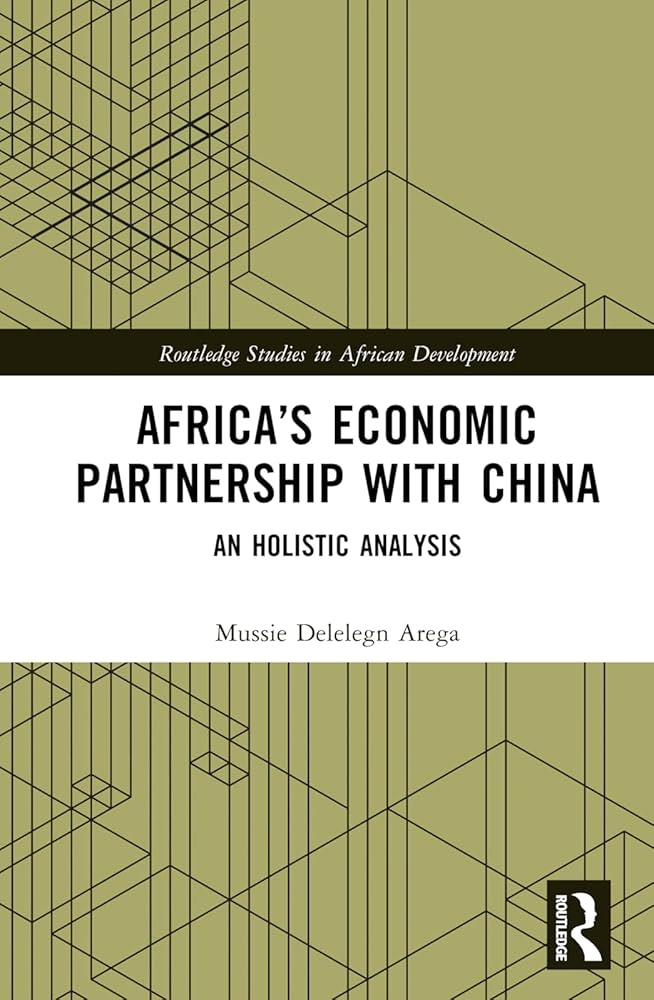
The book presents an alternative and thought-provoking narrative on Africa-China economic partnership based on unbiased and evidence-driven analysis and sound scholarly work. In that respect, the book sets the record straight on the nature of Africa’s economic relationship with China and the implications for Africa’s growth and sustainable development objectives.
There is no doubt that the findings and policy conclusions of the book will be of a direct interest to students, academics, and researchers alike and policymakers who wish to know what it takes to develop productive capacities, foster the process of structural transformation and set in motion sustainable economic development trajectory.
The book presents compelling evidence for the author’s central conclusion that while there are many lessons that African countries can learn from the development pathway followed by some of the most dynamic Asian economies, such as China and Vietnam, ultimately the main responsibility for driving the development of African countries lies not with China or Vietnam or even on the former colonial masters but the “African countries themselves who should be in the driving seat, taking their countries in the right direction”. This, in effect, the author argues, means that “Africa’s growth and development must rely on home grown deliberate policies that mobilize and recalibrate key enablers and drivers of growth and transformation”.
A few of the book’s insightful findings and observations are worth highlighting.
Using concrete examples and detailed data, the book explains why productive transformation matters for countries in sub-Saharan Africa and its implications for structural transformation and Africa’s relations with China. The entire analysis in Chapter two is devoted to these issues with special focus on the intrinsic relationship between productive capacity building and structural transformation. Then Chapter three maps and measures productive capacities describing in detail with the necessary data where sub-Saharan African countries stand in their performance in the different components of productive capacities.
There are significant and extremely useful policy messages emerging from these discussions, but in this reviewer’s opinion, the book’s most striking and perhaps most original contribution is how the author utilizes the Productive Capacities Index (PCI) — an innovative and multidimensional composite index — to measure the level of development of productive capacities in sub-Saharan Africa and gauge whether the growing relationship between sub-Saharan African countries and China has resulted in qualitatively different development outcomes for African countries. This analysis makes the book ground-breaking since there are limited discussions in the academic and policy-oriented literature on the key ingredients necessary for building productive capacities and why acquiring such capabilities matter for promoting structural transformation in latecomer economies such as sub-Saharan African countries.
If researchers, academics and African policymakers are curious about the implications of Africa’s low performance in PCI for Africa’s relations with China and how this relationship differs from Africa’s long-standing partnership with traditional development partners, they will be well advised to read Chapters four and five of the book, which address these issues comprehensively. Indeed, the book goes a step further in Chapter six to provide concrete country-level analysis — using two countries, Angola and Ethiopia as case studies — and delving in detail into the challenges facing these countries in building productive capacities and the impact that this had on their relations with both new and traditional development partners. The author concludes that the rise of China and its robust engagement in sub-Saharan Africa offers ample opportunities for countries such as Angola and Africa.
However, the Author stresses that “Fully exploiting these opportunities lies in the hands of African countries themselves. They need to address the infrastructure gap and other limitations in their domestic policies, regulatory, and institutional environments. These include effectively tackling corruption and mismanagement of natural resource rent (particularly in extractive sector-driven economies) as well as rationalizing their incentive structures for firms and enterprises”.
The book contains such frank and insightful observations and policy recommendations in all chapters, which makes it highly relevant for the rethinking of Africa’s future development trajectory. African Union’s flagship project for the 2063 Vision is the AfCFTA agreement, which intends to move Africa into a different policy direction based on deep regional integration and lessons learned from past experiences as well as successes and failures. In this respect, the latest book by Dr. Mussie Delelegn Arega comes at the right time, with the right messages and policy recommendations that will assist African countries in their journey of rediscovery and sustained development through home-grown development policies and strategies.
From this perspective, the last three chapters of the book, which focus on policy lessons are worth reading as they provide — based on overwhelming evidence and focused on the experience of Vietnam – the lessons that African countries can learn from the rapid and inspiring economic development and structural transformation displayed by that country. What makes the analysis highly relevant is that the author is not looking for the “best practice” experience that African countries can imitate regardless of their level of development and different cultural and institutional conditions. But, rather, the objective is to identify policies and strategies that are “best match” for the African countries’ current conditions and development and historical reality.
This explains why the author chose Vietnam, a country that has demonstrated extraordinary economic development in the last four decades despite its recent history of conflict, poverty, and low-level of economic and technological development. In many respects, the history of Vietnam is similar to many African countries, which are also agrarian based with a history of conflict and colonial rule.
The book recognizes that Vietnam’s development agenda is still in the making and like many fast growing developing economies, Vietnam has its share of challenges and ups and downs. However, as the book shows, there are many useful lessons that African countries can learn from Vietnam. One of them is that the role of the State matters but even more important is a political leadership focused single-mindedly on achieving inclusive and sustainable development based on pragmatism and carefully selected policies and strategies and implemented, with laser-like precision, by institutions that that are fit for purpose.
The overall message of the book for African countries is clear: know where you want to go first — then with a development-focused proactive State, willing to keep its policy independence and to learn from others, including from its own mistakes, implement policies with pragmatism and by developing institutions that focus on achieving inclusive development rather than individual self-interest — you will reach your destination. This book should thus be required reading both for policymakers, especially in Africa, and for scholars working on Africa and the role of South-South cooperation in development.
***
About the reviewer: Taffere Tesfachew, PhD, Adjunct Professor, the Nelson Mandela School of Governance, University of Cape Town and Senior Advisor, Economic Transformation in Africa, the Tony Blair Institute for Global Change (TBI).
About the book author: Mussie Delelegn Arega, PhD, is A/Head of Productive Capacities and Sustainable Development Branch of UNCTAD’s Division for Africa, LDCs and Special Programmes. With decades of experience in trade and development-related issues, he is currently responsible for the analytical, technical, and normative work of UNCTAD in support of developing countries.




 Ethiopian Policy Institute