
Introduction
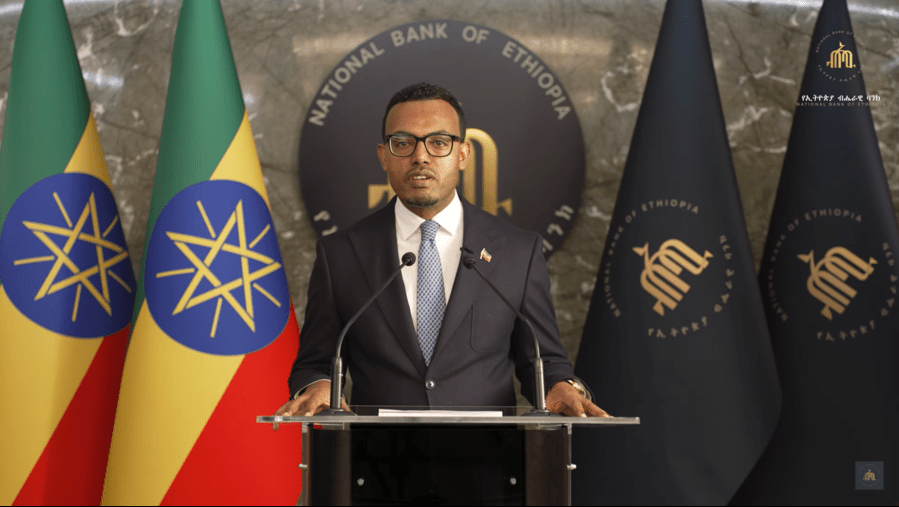
On July 29, 2024, Ethiopia took a significant step in its economic policy by introducing a free-floating foreign exchange regime. While the full impact of this decision remains to be seen, early signs — such as steep currency depreciation and inflation — along with public and media reactions, have sparked growing concerns about the broader implications of this policy shift.
It is important to understand that free-floating exchange rates should not be viewed as a solution to Ethiopia’s deep-rooted structural development challenges. Lessons from successful Asian economies suggest that free-floating exchange rates, when used in isolation, may not be effective without the support of monetary policy autonomy and clearly defined inflation targets. In these contexts, free-floating served as a short-term intervention rather than a long-term strategy.
A Comparative Overview
The experiences of Ghana, Zimbabwe, and more recently Nigeria, highlight the potential dangers of adopting a free-floating regime without careful consideration of local conditions. In Africa, unlike in Asia, the transition to free-floating has often led to economic instability rather than progress.
Asian countries moved towards managed floating and eventually to free-floating only after advancing their socioeconomic development processes significantly — a path that has not been mirrored in many African nations.
For decades, industrialized economies, with the notable exception of Japan, have favored flexible or free-floating exchange rate policies, leaving the moderation of exchange rates to the “invisible hand” of the market, where demand and supply dictate long-term equilibrium.
In contrast, developing nations maintained fixed (pegged) exchange rate regimes until the 1970s. Since then, however, many have transitioned towards managed floats, and some have adopted flexible or free-floating regimes, particularly since the 1990s. This shift was largely driven by the rise of the US dollar as the dominant global currency and the end of the Gold Standard in 1971.
The global economic and financial crises of the 1970s, 1980s, and 1990s — such as the commodities and debt crises, the Argentine, Russian, and Asian financial crises — further motivated these changes, as did the global financial crisis of 2007-08, which saw countries like Russia, Indonesia, and South Korea free-float their currencies during or after these crises.
Ultimately, the choice of a particular foreign exchange regime and the determination of the optimal exchange rate must be predicated on domestic socioeconomic fundamentals and political conditions. Economic policies, including exchange rate regimes, should not be dictated or prescribed from outside, but must be consistent with the overall development objectives of nations.
Governments bear the responsibility of weighing the costs and benefits of their exchange rate policies, ensuring that these decisions are informed by research, technical expertise, and a transparent flow of market information. Moreover, there must be clarity regarding the causes and effects of exchange rate policy choices, their intended objectives, and their integration with other policy instruments to hedge against potential risks and uncertainties.
Socioeconomic Fundamentals are Key
The global economic environment, particularly trade and financial flows, can compel nations to adjust their exchange rate regimes. However, domestic macroeconomic fundamentals play a crucial role in shaping the choice and effectiveness of these regimes.
Asian economies, including Japan, as well as emerging markets like China, India, Thailand, Singapore, and Vietnam, still predominantly use managed floats. These countries focus their exchange rate policies on facilitating exports, enhancing international competitiveness, maintaining financial stability, and driving economic growth. Indonesia and South Korea transitioned to free-floating only after the 1997 Asian financial crisis, with Malaysia making the shift in 1983.
India’s approach to exchange rate management offers valuable lessons for developing countries. The Reserve Bank of India (RBI) operates a “de facto free float” but intervenes in the currency market to stabilize the rupee when necessary.
In 2023 alone, the RBI’s interventions were estimated between $78 billion and 80 billion, effectively making India a managed float in practice. Meaning, even if a developing country follows a free-float exchange regime, it does not mean that there is no room for government intervention so long as it is justified, and the government has the financial capacity to intervene. This approach has sparked debates with the IMF but has not deterred the RBI from taking corrective actions when needed.
Successful Asian economies share common traits: they have bolstered their productive capacities, significantly improved productivity, expanded industrial bases, undergone structural transformations, and elevated living standards before adopting managed or free-floating exchange rate regimes. As these economies have prospered, the significance of exchange rate management has diminished. The “golden rule” of market forces now largely determines exchange rates, as the cost of actively managing them has proven too high.
In contrast, several African countries, including Egypt (since 2016), Gambia, Ghana, Kenya, Nigeria (since 2023), Uganda, South Africa, Zambia, Zimbabwe, and now Ethiopia, have adopted “imperfect” free-floating regimes prematurely. These regimes are considered imperfect because the markets are not fully competitive, monetary policies lack autonomy, macroeconomic fundamentals are unstable, and institutions are weak. Algeria, Morocco (since 2018), Mauritius, and Tunisia use managed floating systems. Francophone countries in the West African Economic and Monetary Union (WAEMU) previously pegged their regional currency, the CFA, to the French franc and now to the euro.
Despite theoretical expectations that foreign exchange policies would control inflation, ensure macroeconomic stability, and improve terms of trade, these policies have not succeeded in taming inflation or stabilizing economic fundamentals in many African nations. Industrialization remains sluggish, terms of trade continue to deteriorate, structural transformation is elusive, and poverty reduction remains a significant challenge across much of sub-Saharan Africa, with notable exceptions like Mauritius and South Africa.
The experiences of Ghana, Zimbabwe, and Nigeria serve as cautionary tales. The fate of Ethiopia’s Birr could potentially follow a similar trajectory. If the current depreciation-inflation spiral continues, it’s unlikely that the Birr will withstand the destabilizing forces it now faces.
Ethiopia’s “New Structural Adjustment Program (NSAP)”: How to Avoid the Potential Free Fall of the Birr?
Ethiopia’s shift to a free-floating exchange rate has raised significant concerns among experts, academics, and the public. The decision was made with little public debate or policy discussion.
Experts argue that making such a drastic change amidst ongoing conflicts, high unemployment, rampant inflation, and widespread poverty could exacerbate existing socioeconomic vulnerabilities. The risks associated with further depreciation of the Birr and subsequent uncertainties may lead to uncontrollable situations.
While the government’s stated objectives of harmonizing official and parallel market rates, promoting exports, and curbing imports are commendable, it is doubtful that floating the exchange rate alone will address the deep-rooted structural challenges facing the country.
Moreover, Ethiopia’s long-standing inflation problem has fueled public fears that a free-floating regime may trigger further instability and hyperinflation, worsening the vicious cycle of currency depreciation and economic instability. The country’s weak productive capacities and lack of structural transformation mean the supply response to the exchange rate change will likely be slow.
Given Ethiopia’s heavy reliance on imports, curbing essential goods will be difficult, potentially deepening the trade deficit. Additionally, the depletion of Ethiopia’s international reserves could limit policy flexibility if the market fails to achieve an optimal exchange rate. The country’s external debt obligations may also become more challenging to manage under these strained macroeconomic conditions.
Since policy adoption, the Birr has lost more than 120% of its value in six months, and the prices of household goods and essential supplies, including food and medicine, have begun to soar.
Dynamic, evidence-based, and results-oriented macroeconomic policy is crucial for developing countries like Ethiopia. Yet, achieving positive outcomes has proven elusive due to “accidental” policy choices, poor sequencing, lack of capacity to implement sound policies effectively, and an unfavorable global environment. The challenge has been compounded for Ethiopia and other sub-Saharan African countries by increased policy conditionality tied to concessional loans for development.
After intense negotiations, international financial institutions and some donors pledged $16 billion to Ethiopia in program support, direct budgetary assistance, and debt rescheduling. This sum includes a conditional $3.5 billion from the IMF, which required Ethiopia to free-float its currency, lift import bans on 38 items, privatize previously closed sectors such as retail trade, logistics, banking, and State-Owned Enterprises, and commit to public sector expenditure audits.
Ethiopia’s acceptance of these stringent conditions amounts to a “New Structural Adjustment Programme (NSAP),” which compromises policy autonomy, restricts choices, and reflects the country’s desperation for critical funding.
While the $16 billion pledged is significant, given Ethiopia’s acute hard currency shortage, it barely scratches the surface of the more than $100 billion needed annually to rehabilitate the war-torn economy, resettle internally displaced populations, ensure food security, provide essential social services, and revitalize sluggish productive sectors.
The pressing question now is what policy options are available to Ethiopia to prevent further deterioration and the deepening of the vicious cycle of depreciation, inflation, and macroeconomic instability.
The Way Forward: Viable Policy Options for Ethiopia
Efforts to contain or reverse macroeconomic instability caused by currency misalignments have not yielded successful outcomes in Africa. Central banks’ attempts to stabilize Nominal Effective Exchange Rates (NEERs) and Real Effective Exchange Rates (REERs) have largely failed, resulting in prolonged struggles to boost exports, reduce imports, and control inflation through exchange rate policies.
As Ethiopia’s situation continues to worsen — whether due to the depreciation-inflation spiral or new conditionalities — the need for a well thought out strategy becomes ever more critical. Ethiopia must develop a strategy that builds confidence in its microeconomic and macroeconomic fundamentals.
It is challenging to achieve success in an environment characterized by limited private sector involvement, a declining manufacturing sector, inadequate education quality misaligned with economic needs, insufficient funding for research and development, frequent electricity outages, and untapped potential in information and communication technologies due to weak infrastructure, including the absence of secure internet servers and limited broadband connectivity.
Without significant investment in productive capacities, revitalizing agricultural production, strengthening manufacturing productivity, and fostering intersectoral linkages, Ethiopia will struggle to overcome its structural development challenges. These efforts must be underpinned by conducive political, monetary, and macroeconomic environments.
Moreover, for Ethiopia, peace and political stability are essential to building credibility in political, legal, institutional, and policy frameworks. If market perceptions of political governance are negative or uncertain, the objectives of reform will likely fail.
Additionally, a free-floating exchange rate policy is vulnerable to speculative decisions, mismanagement, corruption, and insider trading. If the market perceives institutional capacities as too weak to address these issues effectively, a free fall of the Birr could become inevitable, exacerbating macroeconomic and financial instability.
To foster the credibility of the Birr, Ethiopia must undertake confidence-building measures that strengthen its position against major international currencies. This involves ensuring the convertibility of the domestic currency, both externally and internally, not just for trade but also for other international payments.
External convertibility means that the Birr should be accepted at exchange bureaus, duty-free shops, government currency exchange centers, and banks, facilitating its use abroad. Notably, Ethiopia is the only country where duty-free shops in its capital refuse transactions in the national currency.
Internally, convertibility refers to the ease with which residents can convert their Birr into foreign currencies for recognized purposes, such as medical treatment or education abroad. Although this may seem impractical in the short term, efforts must be made to address these issues as part of a broader confidence-building strategy in the medium and long term. Holding banks, however, must ensure that local currency deposits are legal and traceable.
Addressing Ethiopia’s economic challenges may also require “unconventional” monetary policies. Countries like Indonesia, South Korea, and Peru adopted creative approaches after moving to free-floating exchange rates, including raising domestic interest rates to reduce the money supply and curb inflationary pressures. While this measure can slow economic growth, it is sometimes necessary to stabilize the currency. These countries also supported their domestic currencies by selling international reserves and investing in key economic sectors. For Ethiopia, with its limited reserves, this might be less feasible, but the principle of thinking outside the box remains relevant.
Ethiopia should also further deepen its conventional monetary policies by removing limits and other restrictions on credit flow, possibly by lowering reserve or cash requirements. The banking system can increase free reserves through open market operations and quantitative easing, which would enhance liquidity and stimulate economic activity.
Furthermore, expanding policy space and pursuing an autonomous monetary policy are vital. Ethiopia must build its capacity to formulate and implement home-grown development strategies, relying more on domestic resources and less on external aid or borrowing. Drawing lessons from Asian economies during crises, if a country pursues a fully flexible exchange rate policy, it should be able to pursue a fully autonomous monetary policy, limiting the impact of foreign monetary developments on domestic interest rates.
Finally, Ethiopia needs effective inflation-targeting and the independence of the National Bank in monetary policymaking are essential components of this strategy, helping to safeguard Ethiopia’s economic stability and sovereignty.
***
This article was prepared in full consideration of ST/AI/2000/13 section 2. The opinions expressed in this article are the author’s own and do not reflect the official views of UNCTAD or the Magazine.
Editors note: A version of this article was published by The Reporter Magazine on August 25, 2024.

 Ethiopian Policy Institute