
Adanech Abebie, the mayor of Addis Ababa, addressed last week a warm-up session for her party’s upcoming convention, urging cadres of the Prosperity Party to embrace what she described as “broad and inclusive” gains. Her assertions might have inspired the foot soldiers of the incumbent had it not collided with the realities unfolding across the country. But it manifests a contradiction between official narratives of transformation and the depressing figures documenting widespread deprivation that casts a pall over the leaders’ declarations of prosperity.
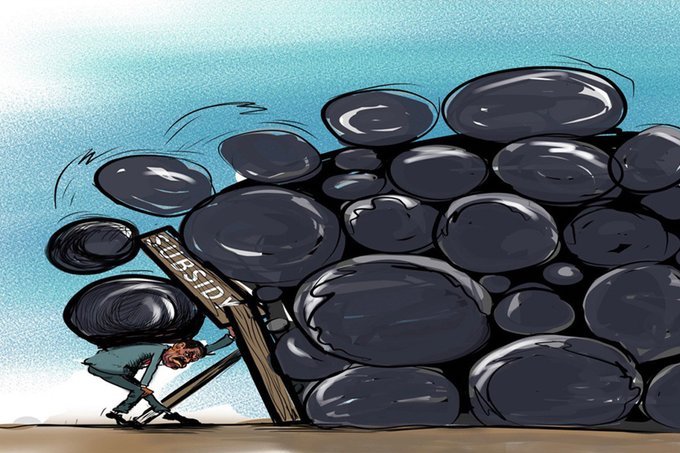
Despite policymakers’ complacent and out of touch claims of a declining Consumer Price Index (CPI), or inflation, and a purported 400 billion Birr in fuel subsidies and 60 billion Birr for social safety nets, ordinary Ethiopians continue to feel the sting of rising prices and deepening poverty. Aggressive economic policy reforms, including a floating currency, financial sector liberalization, trade liberalization, and the hurried removal of public subsidies, have led to soaring living costs for the vast majority of citizens.
A year remains before the complete phase-out of fuel subsidies is scheduled, and many fear that such rapid moves, coupled with the value-added tax (VAT) on previously exempt goods, risk undermining the welfare of low-income households.
Between 2020-24, the education budget dropped from 123 billion Birr to 55.8 billion Birr — a 55% reduction that risks hobbling human capital development. Similarly, the health budget declined, from 51 billion Birr to 22.6 billion Birr, amounting to a 56% cut. Conversely, military spending increased from 16.5 billion Birr to 65.7 billion Birr — a staggering 298% increase. Experts see such distortions in resource allocation as a clear sign of the Abiy regime’s misguided policy prioritization, especially in a country where poverty and inequality are on the rise, education and health outcomes are deteriorating, and human capital development remains woefully inadequate.
The grim facts on the ground are hard to ignore. Once lauded for double-digit growth, Ethiopia now faces mounting evidence of deteriorating socioeconomic conditions. The Abiy regime’s pledges to “stabilize” or “streamline” budgets ring hollow to Ethiopians who confront the abrupt removal of fuel subsidies, utility subsidies, rising food and commodity prices, and a tax regime and enforcement that burden businesses.
The most damning portrait of the country’s predicament appears in the 2024 Global Multidimensional Poverty Index, which notes that Ethiopia remains home to 86 million multidimensionally poor people, 72% of its domestic population, and amounting to 7.8% of the global total. The report finds that 83.7% of the world’s multidimensionally poor reside outside urban centers, and Ethiopia illustrates this rural-urban divide. Close to 64.5% of its rural population lacks essential necessities such as sanitation, cooking fuel, and adequate housing, making a mockery of official pronouncements of “inclusive prosperity.”
These numbers do not exist in a vacuum. They reflect the lived experiences of individuals who rely on subsistence farming yet lack electricity and clean water.
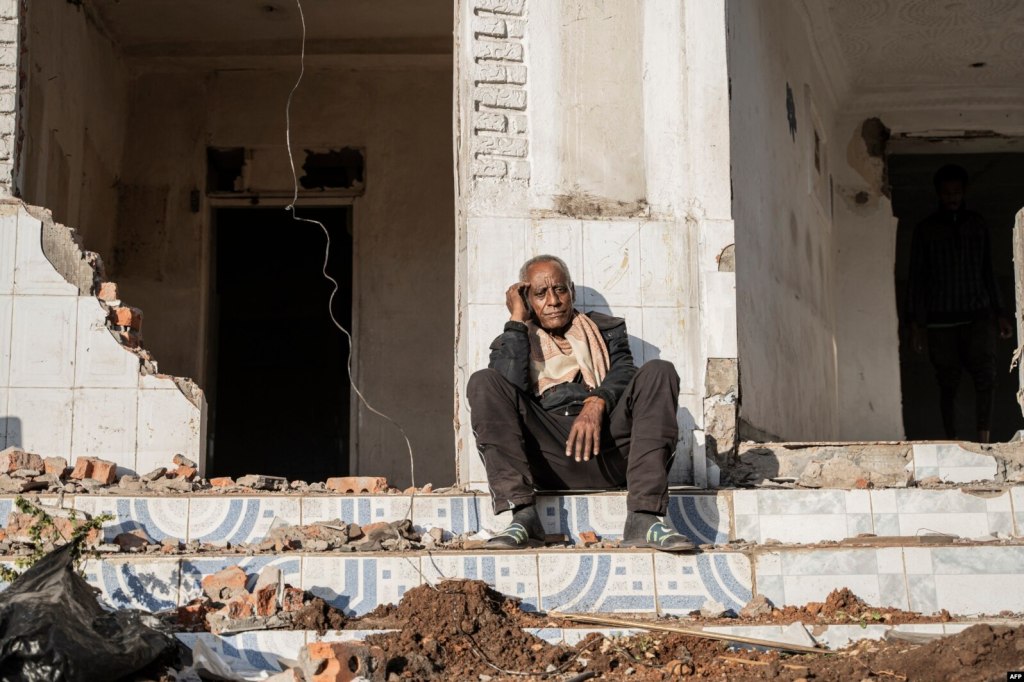
The northern regions, particularly Tigray and Amhara regional states, have seen their infrastructure destroyed by civil war, pushing poverty rates even higher. Humanitarian aid is often unable to keep pace with the needs of displaced populations, where 44.2% of Ethiopians live in households with children under five remain undernourished. UNICEF reported that no less than nine million children remain out of school, driven away by conflict, violence and natural disasters.
It would be wise to acknowledge that this is a crisis that threatens to undermine the country’s long-term development as children bear the brunt of poverty. Close to 53.7% of Ethiopia’s multidimensionally poor are minors, many of whom grow up without basic healthcare or education. In the six years beginning in 2015/16, the absolute poverty rate resurged by 10% points to 33%, an annual increase of nearly 1.6%. It is a regrettable backsliding, especially pervasive in rural regions, where poverty soared from 25.6% to 47.5%.
The destruction of livelihoods in Amhara, Tigray, Oromia, Somali, and Afar regional states due to wars and militarized conflicts, combined with stubborn inflation, has widened the gap between rich and poor. Conflicts have stymied economic expansion and discouraged investors who once viewed Ethiopia as an attractive frontier market. Foreign investors now see heightened risks, leading to capital flight and a decline in the foreign direct investment needed to fund poverty-reduction programs.
The ballooning need for humanitarian assistance, which over 21 million Ethiopians depend on, can prove how volatile the situation remains. The regime’s attempts to repair the fiscal ledger through tax increases and subsidy withdrawals could inflict further pain on a population that has already endured more than its fair share of suffering.
The so-called “Homegrown Economic Reform Agenda”, whose bill is paid by the International Monetary Fund’s (IMF) extended credit facility, amounting to $3.4 billion, aspires to rectify macroeconomic imbalances, restore debt sustainability, and stimulate private-sector-led growth. The IMF’s prescriptions may ostensibly stabilize the regime’s balance sheets, but they may well do so at the expense of the most vulnerable.
The measures required to meet the policy goals impose heavy burdens on those least equipped to shoulder them. It could not have come at a more unlikely time when the country and its population face difficult political and social circumstances.
The adoption of a free-floating exchange rate regime has led to 120% depreciation of the Birr, while pushing inflation to what the IMF projects to 30-35% this year. Food inflation has picked up at 20% for much of 2024, and further loss of ground by the Birr will only tighten the squeeze on household budgets. Although the authorities have earmarked 1.5% of GDP for social safety nets, including cash transfers that amount to 0.4% of GDP, doubts persist that these efforts can keep pace with the rising cost of living.
Removing fuel and fertilizer subsidies would particularly threaten food security in rural communities. The agricultural sector is already reeling from conflict and erratic weather patterns, and rising fertilizer costs would likely cut production and place more families at risk of hunger. A gradual and phased approach with expanded social safety nets might address this concern, yet policymakers seem reluctant to adjust the timetable.
Capital expenditures, meanwhile, have been slashed, jeopardizing infrastructure projects that could have spurred equitable growth. Additionally, at a scant 6.3% last year, the tax-to-GDP ratio trails far behind the sub-Saharan average of 15%. The Abiy regime plans to increase it to 10.8pc by 2026 through reforms that may well hit low-income households hardest.
Whether the reforms can balance macroeconomic stability and inclusive growth remains to be seen. Liberalization advocates claim it will bring transparency, better governance, and climate-smart investments, but the key test lies in protecting those perched precariously above the poverty line. The Abiy regime has staked much on rebranding Ethiopia as a magnet for capital, but it should also ensure that austerity does not transform the country’s poorest citizens into collateral damage of economic orthodoxy.
Between 2016-19, Ethiopia was one of seven African countries to achieve rapid reductions in poverty, a momentum derailed by war, conflict and global disruptions. The potential for renewal exists if policymakers prioritize social investments, rural infrastructure, and robust safety nets. Doing so might help restore trust in a regime that promised a renaissance but has delivered devastation. Whether Ethiopia will harness its capacities and youthful population to reverse the alarming slide into more profound deprivation or remain trapped in a cycle of conflict and want is yet to be seen.
Despite its current tribulations, however, Ethiopia need not be doomed to perpetual hardship. Alternative policy paths do exist.
It is up to its contemporary leaders to secure debt relief from servicing costs that consume large portions of the country’s public revenue. Achieving this could open up space for social spending while redeploying resources from security budgets to health and education to better serve developmental goals. Yet, such approaches seldom tower discussions in the corridors of power or the boardrooms of multilateral lenders.
As Adanech Abebie issues rallying cries to party loyalists in Addis Abeba touting the regime’s “reforms”, it is worth remembering that slogans cannot paper over facts and data. Poverty waits for no one, and Ethiopia’s economic future is being shaped not by lofty declarations, but by the policies now put in place. The choices made now will no doubt resonate for years to come.
Editors Note: A version of this article was published by Addis Fortune on January 18, 2025.
 Ethiopian Policy Institute