
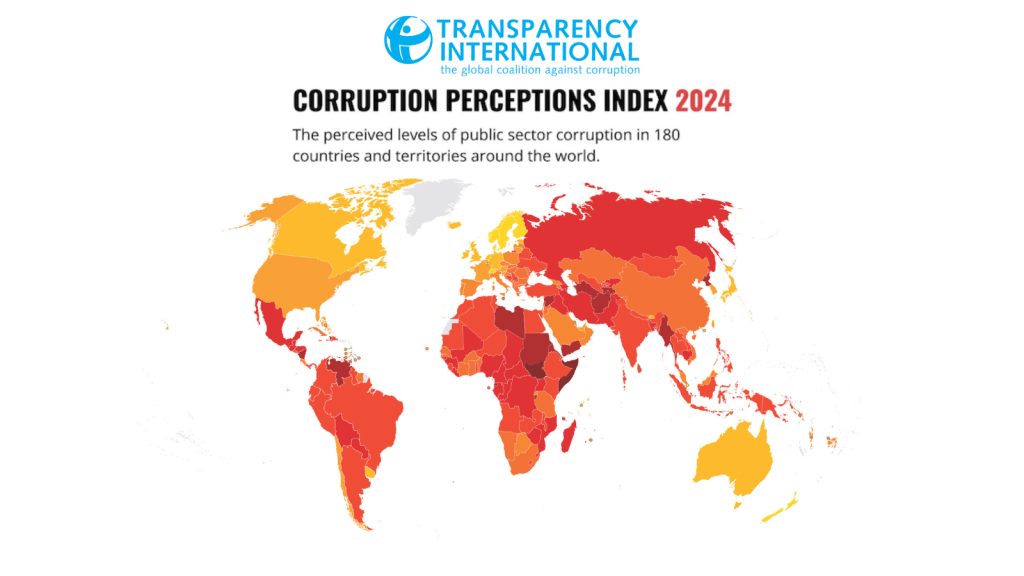
Ethiopia continues to perform poorly in an index that tracks the perception of public sector corruption, published on February 11, 2025, by the anti-corruption watchdog Transparency International.
The Corruption Perceptions Index ranks countries based on how corrupt their public sector is perceived to be. A country’s score indicates the perceived level of public sector corruption on a scale of 0 (highly corrupt) to 100 (very clean).
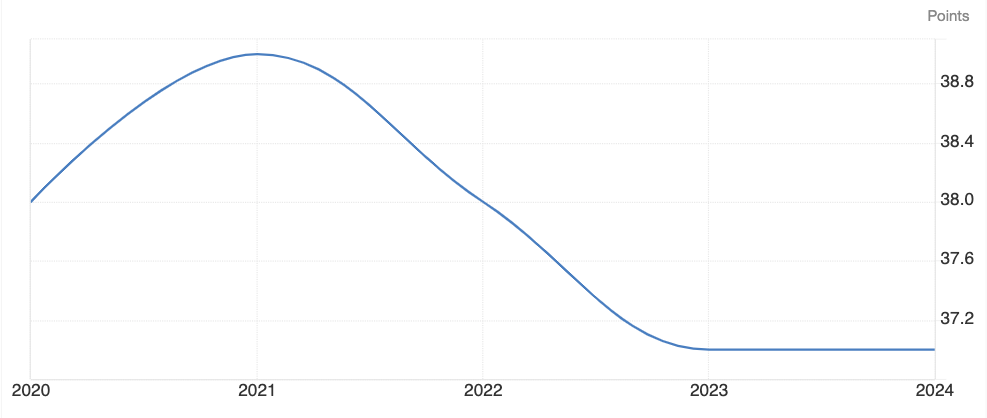
In 2024, Ethiopia’s score of 37 out of 100 — which is 99th out of 180 countries ranked — continues to decline from its all-time peak of 39, recorded in 2021 (Figure 1). In addition, Ethiopia’s score of 37 falls below the global average score of 43 out of 100.
Key factors for Ethiopia’s worsening corruption are: 1) sustained corruption among public officials; 2) impunity for corrupt officials; 3) lack of robust anti-corruption mechanisms; 4) limited access to justice; 5) crack down on civil society; and 6) closed civic space.
Figure 1: Ethiopia’s Perception of Corruption Score (2020-24)
Erosion of the Rule of Law
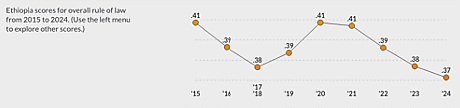
Fundamentally, in Ethiopia, the ongoing erosion of the rule of law is leading to sustained mass corruption and systemic human rights violations. According to the Rule of Law Index 2024, Ethiopia’s Rule of Law score of 0.37 ranks 130 out of 142 countries, with the country’s rule of law score consistently declining since 2020 (Figure 2).
Similar to perceptions of corruption, the most significant factors for the erosion of rule of law in Ethiopia are: 1) worsening corruption; 2) systemic violations of fundamental rights; 3) lack of constraints on government powers; and 4) deteriorating civil justice.
Figure 2: Ethiopia’s Overall Rule of Law Score (2015-24)
Denmark topped the latest Corruption Perceptions Index, ranking as least corrupt, with a score of 90 out of 100, followed by Finland, Singapore, New Zealand and Luxembourg. South Sudan fell to the bottom spot, with a score of 8. Somalia, Venezuela and Syria had scores under 13.
In the Africa region, the highest scorers are Seychelles (CPI score of 72), Cabo Verde (62), Botswana (57), and Rwanda (57). The lowest scorers are Equatorial Guinea (13), Eritrea (13), Somalia (9), and South Sudan (8).
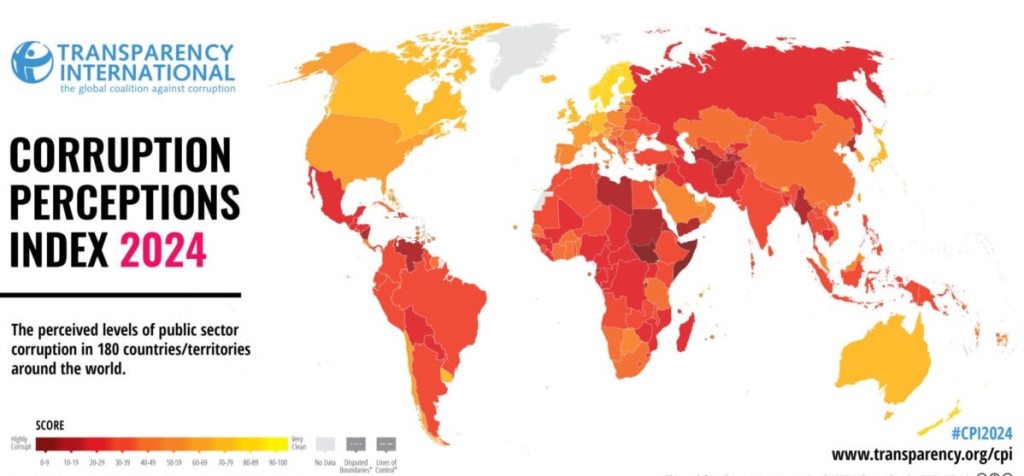
The Corruption Perceptions Index scores countries based on perceptions among experts and businesspeople of public sector corruption, looking at bribery, diversion of public funds and effective prosecution of corruption cases, among other metrics. It uses data aggregated from 13 external sources, including the World Bank, the World Economic Forum, private risk and consulting companies, and think tanks.


 Ethiopian Policy Institute