
Introduction
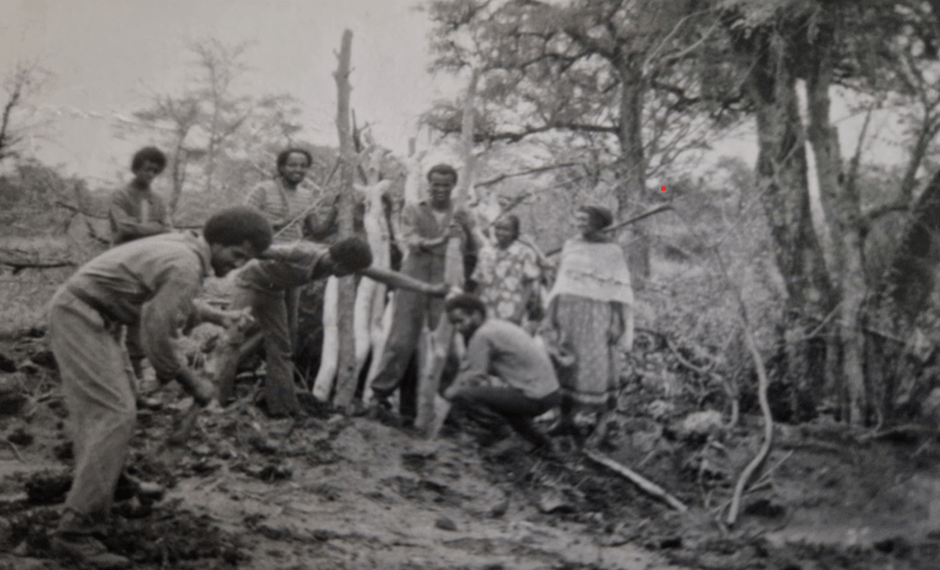
In June 1985, Ethiopia’s university community was mobilized and drafted into the Villagization and Resettlement Programme (VRP), which ended in September of the same year. Students were relocated to different areas in the southwestern and western parts of Ethiopia. Our contingent was flown to Gambella (southwestern province) and settled in the locality called “Tata Zuria (environs)”. It was given the glorious name “Dogali Brigade”1 which was not only historic but also symbolic. I was a freshman student at the time, before studying economics in subsequent years.
This year marks the 40th anniversary of the VRP. Forty years is a long time – in fact, for some, it is a lifetime. For Millennials (Generation Y and Generation Z), who grew up in the era of digital technology and the internet, what happened four decades ago is history. For some of us, however, the events and changes we went through represent experiences that shaped who we are today.
Looking back, it is true that adversity not only tests one’s endurance, but it also shapes one’s thoughts and perspectives. Undoubtedly, with time, some details may become blurred or fade into distant memories. However, most of what happened then has remained embedded in our minds as if it happened yesterday. Some are good memories of friendship and learning, while others are not that positive and, as such, should be left to the judgment of history.
In this article, I wish to share a personal reflection on the VRP and a time when Ethiopia was in an intractable and seemingly unescapable political and socioeconomic quagmire. As a young and innocent first-year university student, I thought that we were going to change the sad situation for the better – and make history. My reflection here will be confined to my recollection. Nevertheless, I believe that it also represents the hopes and aspirations of my generation which have instantly turned into a cry of despair, frustration, and exasperation.
Background and Objectives of the VRP
The 1984-85 famine was one of the most devastating phenomena in the recent history of Ethiopia. It impacted about 10 million people and was more calamitous than the 1972-1973 “great famine” that decimated half a million Ethiopians and accelerated the downfall of Emperor Haile Selassie’s government.
Initially, the response of western countries to the famine was muted due to ideological differences with the Derg regime that moved Ethiopia towards the “socialist bloc”. However, the worsening situation gradually got the attention of Western media and the public, leading to a recording of the charity single titled “We Are the World” in 1985 that galvanized the support of the international community.
This was a time when Ethiopia was under the revolutionary military regime known as the “Derg,” which overthrew Emperor Haile Selassie’s government in 1974 and ruled Ethiopia with an iron fist until its collapse in 1991. VRP was portrayed as a response of the Derg to the cyclical drought and famine that routinely impact the population, particularly in the northern part of the country.
The objective was to move about 2 million people from the drought and famine stricken areas to the lush, green, and untapped southwestern, central, and western parts of the country. Included among the specific objectives were “ensuring food security, promoting rational land use, conserving resources, providing better rural infrastructure, and social services such as education and health”.
These were noble objectives and worthy of the effort. However, critics argue that the real intention was to control the population and prevent the younger generation from joining armed resistance movements in the northern part of the country.
Propaganda and Indoctrination
Long before the mobilization of students, the state-controlled media had begun a propaganda campaign about the objectives of the VRP — developments that have taken place in dedicated sites, fictitious infrastructure that was built to facilitate resettlements, and the expectations of the nation from university students. The national television incessantly showed how excited the population was to move out of their ancestral places to the “new dreamlands”.
One weekday, the university community was called and gathered in a city cinema hall. High-ranking officials and the university administration addressed the community. The messages were clear that: (a) “the call on students by the nation and citizens to free them from the devastating impacts of recurrent drought and famine” was awaiting our favorable responses; (b) serving the community and the nation was “the primary duty of the day”; (c) the government has already put into place “robust facilities” — clinics, stocks of food and medicine, shelter, etc. — to welcome the students and the resettling population; and (d) the government will do everything at its disposal to “ensure the safety, welfare, and wellbeing” of the university community at designated regions.
Looking back, we viewed serving the nation as an honor. I remember that there was as much will as words among students. The whole notion of readiness to serve the nation was not new to my generation or the generation before us. University students of the 1960s had to participate in “obligatory national services” in their fields of study before they graduated. Those a decade older than us also participated in “Edget Behibret” campaign, literally translated into “Development/Growth with Unity”.
In our case, before the 1985 VRP, it was mandatory to participate in the nationwide “basic education for all” campaign during school vacations. The youth of our time were also forcibly drafted into the national military service. Many perished in the protracted conflicts that engulfed the country until the downfall of the military regime in 1991. For most of us, surviving to tell the tales is not only a matter of luck but also a “miracle”.
After the gathering, I remember the general mood of the students was mixed. On the one hand, we saw the VRP as a national duty and morally justifiable. On the other hand, due to years of mutually suspicious and uneasy relations between the military regime and the student body, we were not sure how the programme would end and what would follow afterward. Hence, we were not convinced by the rhetoric of the officials and cadres. Freshmen students, including myself, were bewildered and did not know what was in the making and how it would impact our future studies.
Realities on the Ground
When we arrived at Tata environs, it became evident that everything we were told at the city cinema hall was utterly false, a political gimmick, and hoodwinking. There were no tents or basic amenities such as clinics, drinking water or food at the site — let alone the promised newly built shelters, stockpiles of medications, and food rations. We were given a handful of flour and a piece of canned meat to prepare our food by using a woodfire, water from the nearby river, and shared pans. In the first few days, we spent time cutting trees to set up our temporary sheds and beds.
It has become clear that despite the good intentions, the VRP was not carefully planned, studied, and adequately prepared in terms of basic logistics on the ground. Fasika Sidelil (member of the politburo, responsible for economic planning during VRP), in his recently published memoir2 hinted that the programme was not part of the country’s strategic or medium-term plans. Rather it was an “emergency response to the famine and the reluctance of Western countries to provide humanitarian aid to Ethiopia”. He also provided detailed accounts of international and domestic factors that contributed to the failures of the VRP, including his party’s resistance to private land ownership.
Similarly, independent observers argue that the campaign suffered from a series of shortcomings, including: (a) lack of transparency and feasibility studies, planning, and adequate preparation; (b) involuntary eviction of people from their traditional villages; (c) lack of experience of students in the VRP (e.g., cutting trees and building shelters); (d) lack of a dedicated programme to facilitate integration and create social harmony between the newly arriving population and the custodian of the land in the newly designed settlement areas; (e) absence of proper studies on the environmental impacts of the VRP as the programme involves deforestation; and (f) scant financial and human resources, poor logistics and lack of basic amenities such as water, food, shelter, and clinics.
Some of these problems further deepened and continue to the present day, posing serious challenges to Ethiopia as ethnic-based political narratives have begun to take root since 1991. Those resettled in 1985, and their descendants have been forcibly displaced from Wollega3, particularly since 2016.
At Tata environs, basic amenities were non-existent not only for students but also for the newly arriving population most of whom were struck by famine, ill-health, and the agony of adjusting to the new environment, leaving their homes and, in some cases, their loved ones behind. The entire VRP was costly socially, politically, economically, and environmentally. The brazen nature of the programme imposed against the will of the people made it unsuccessful, overly controversial, and largely unpopular throughout Ethiopia and internationally due to inadequate planning, weak management, and failed systems of coordination.
Out of 2 million people marked for resettlement in all sites of the VRP, close to 500,000 may have been moved from their traditional land and resettled in villages and resettlement areas throughout the country. Of these, some estimates indicate that Gambella hosted about 70,000 households.
At a personal level, this was a time when we came closer to the grim reality of facing fellow citizens with acute deprivation, starvation, and mass destitution. Most of us had incessant nightmares, abominations, fears, anxiety, and psychological disturbances from watching the emaciated bodies of children, women, and the elderly.
Due to mass displacement, credible sources4 reveal that close to 100,000 people may have died during the VRP operations. Dawit Woldegiorgis5, Commissioner of the Ethiopian Relief and Rehabilitation Commission at that time, puts the death toll at 14,000 a day or between 1 million and 1.5 million, significantly higher than those reported by the international humanitarian aid organizations.
Ethiopian authorities questioned the figures without denying deaths from resettlement operations. Some separated families, when they realized the impossibility of a reunion with their loved ones, took their own lives. Similar reports indicate that those forcefully evicted from their ancestral lands committed suicide, in some cases, collectively. Many were eaten by wild beasts while on their way back to their birthplaces (escaping from the resettlement areas under darkness). Many others also perished on arrival in the new environment due to malnutrition, lack of potable water, and communicable and vector-borne diseases.
Despite the harsh realities of socioeconomic chaos of the time, and the psychological shocks it inflicted on us, the VRP had some positive spells. It exposed us to the realities of the failed political system, compounded by weak institutions, dilapidated infrastructure, mismanagement of resources, and overall bad governance.
It was an early experience and familiarity with the impacts of wrong political narratives, broken promises, and unfulfilled aspirations. We also developed resilience against all odds and fostered unshakable interpersonal skills and friendships that have transcended four decades. More importantly, we became agile and adaptive to new circumstances and risk-takers in our later lives.
Picture of Group 8, Syndicate A, Gambella (Tata), 1985.
40 Years of Unprecedented Changes at National, Regional, and Global Levels
Centralized governance of the Derg era brought economy-wide productivity loss, generalized poverty, recurrent famine, the feelings of exclusion and marginalization, especially among the educated class and the rural poor. These all, in turn, led to precipitous socioeconomic collapse even after the end of military rule in 1991. Sadly, 40 years on, such problems have widely persisted or have not been fully addressed by successive governments.
Amid multiple shocks that the country endured from the “socialist revolution”, major historical, political and economic events molded and shaped the thought paths of students that participated in the 1985 VRP.
Early in our childhood, in Ethiopia, we witnessed the overthrow of Emperor Haile Selassie’s government and subsequent political instabilities and protracted armed conflicts. The confluences of these events led to the independence of Eritrea in 1991, making Ethiopia the most populous landlocked country in the world. Now, my generation had some unique stories to tell subsequent generations: we swam in the Red Sea, boarded large commercial ships, went on field studies, and proudly walked in the port cities of Massawa and Assab that are now under the Eritrean administration.
In Africa, we saw the last wave of newly independent nations from colonial rule and changes of many governments either through democratic elections or via illegal and destructive means. We also witnessed the end of the apartheid regime in South Africa, the Rwanda Genocide, the birth of South Sudan, and the emergence of many African nations out of conflict although most of them have immediately relapsed back into conflict situations.
Globally, we have vivid memories of perestroika, the collapse of the Berlin Wall, the end of the Cold War, the collapse of the Soviet Union, “balkanization”, and ruinous conflicts in Africa, Asia, Eastern Europe, and the Middle East.
On the economic front, in the last 40 years, we have observed the rise of many developing economies notably in Latin America and Asia. For instance, in less than three decades, and despite a sad period of dictatorship under a brutal military rule of the 1990s, Chile has become a high-income country with a GNI per capita (in PPP terms) of $30,140 ($17, 020 in current U.S. Dollars) in 2025 from less than $2000 in the 1990s. Similarly, Costa Rica’s GNI per capita skyrocketed in PPP terms from about $4,700 in 1990 to $26,120 (World Bank database). Such impressive development outcomes are akin to that of the Asian Tigers of Singapore, Taiwan, and Hong Kong.
Unfortunately, socioeconomic progress in Africa (with a few exceptions), remains largely disappointing, lagging the developing regions of Latin America and Asia. The two regions are where many countries have shown an increasing convergence with the developed nations technologically, in terms of industrialization, income levels, standards of living, and socioeconomic status.
At different times throughout the four decades, in parallel with remarkable economic progress, my generation has also lived through the debt and commodity (oil) crises which severely impacted Africa; regional and global financial crises; climate change and environmental degradation; ravaging civil wars and conflicts and, lately, the bout of the COVID-19 pandemic.
Key Challenges on the Ground
The immediate challenge was our inability to adjust to the physical environment and to cope with fear and anxiety resulting from newly arriving settlers who were draught-stricken, physically and psychologically exhausted, and famished to death. While we were internally broken, helplessly watching the suffering of fellow citizens can be inconsolably heartbreaking.
The second challenge was the overall condition at the camp. In less than a week after arriving at Tata environs, the student body revolted against the miserable conditions on the ground. Many students themselves got sick due to exhaustion, dysentery, insect bites, malaria infestation, and the overall harsh environment of uncultivated, uninhabited, and inhospitable lowlands.
Luckily, there was no reported death from the confluences of these, although we lost a few students due to other causes. One student died drowning in the nearby river (Gillo River) and one more from another camp was lost in the wild, reportedly, scavenged by wild carnivores. Only his pair of shoes, pieces of clothes, eyeglasses, fingernails, and wristwatch were found in the nearby forests. Two additional students passed after our return to our respective campuses due to illnesses sustained during the VRP.
Despite the rhetoric we heard at the cinema hall, the political establishment was not concerned with the health, safety, and welfare of students. Nevertheless, to deal with the extreme conditions, students designed entertainment programmes, including live music and literary evenings lit by campfires and occasional moonlight. Students of the Department of Foreign Languages and Literature were pivotal in leading these events whereas many from other departments also contributed to enliven the programmes. Amazing poems and short stories were read during the events. Many were sarcastically and satirically critical of the political establishment, the university management, and the punitive environment. Live music with traditional and modern dances was performed, especially on Fridays and Saturdays, all of which are still fresh in memory.
Roughly three weeks into the programme, high-ranking officials of the Derg paid a visit to the “Dogali Brigade”. Their arrival reignited new rounds of opposition and revolting. These were followed by demands for better conditions, including improved rationing of food, drinking water, and the provision of medical services. We also demanded an early return to our university studies.
When students demanded water, we were sent a group of rising Ethiopian singers of the time and the famed Roha band. The officials conflated our demand for “Wuha” (the Amharic equivalent for water) with Roha (a notable musical band of the time). The most disconcerting part of this was how government-controlled media reported the grievances of the students. Evening television and radio newscasts covered the day’s event as “students warmly welcomed members of the politburo and expressed their firm support to the VRP of the Government”!
Lessons Learned and Policy Implications
The 1970s and 1980s can be summed up as decades of Ethiopia’s sociopolitical upheavals, economic regress, and tribulation. The heavily centralized and communal ownership of the means of production under the military regime undermined economy-wide productivity. The government that toppled the Derg in 1991 introduced the “Developmental State” model that combined “strong state” and market mechanisms. The model succeeded in generating high economic growth rates in the 1990s and 2000s, but these were not broad-based, inclusive, and sustainable.
As with the command economy, the mixed economy model also suffered from weak institutions, low levels of human capital, ethnic polarization and fractionalization, weak productive capacities, and the absence of structural economic transformation.
Consequently, while Ethiopia is rich in history, natural resources, and geological heritage, it remains poor in terms of investible capital and its intergenerational transfer. Despite its reservoir of freshwater and massive arable land, it remains persistently food insecure and suffered two major devastating episodes of famine in a decade.
Looking back, we can easily make direct connections between governance, economic development, and societal well-being. There were popular demands for the regime to enlarge economic opportunities for all and formulate sound, vibrant, and job-creating development policies to effectively address the country’s myriad problems.
All these have fallen on deaf ears and led to a massive exodus of the educated elite to foreign countries not only in search of better lives but also in fear of political backlash, violence, and potential reprisal. Today, Ethiopia has more medical professionals, lawyers, and university professors in Western countries than at home.
What has also become vivid is that societal grievances, voicelessness, and powerlessness, if unaddressed, can easily lead to feelings of marginalization and exclusion, which in turn can lead to protracted conflicts. Development requires fostering vibrant institutions and deliberate efforts to ensure public consensus on the desirable socioeconomic paths to expand opportunities and empower citizens as well as ensure sustained peace, security, and political stability.
Nonetheless, the repeated rejection of the Derg regime of peaceful settlement of political grievances led to its inevitable demise in 1991, which left the country with deep division and fragmentation. Today, Ethiopia is the second most populous country in Africa after Nigeria with deep socioeconomic crises, ethnic fractionalization and polarization.
What all this mean for the future of Ethiopia is clear — without fostering peace and political stability and ensuring sociopolitical consensus on the way forward, it will be impossible to achieve sustained progress. The underlying political, historical, geographical, and governance-related problems that have shaped the country’s socioeconomic landscapes in the past remain largely unresolved. If such a trend continues, a repeat of the 1970s and 1980s episodes of famine will be inevitable.
It is time for the current generation and the political elites of Ethiopia to draw practical lessons from the past and avoid future disasters. It is necessary to be open-minded, inclusive, and forward-looking in defusing political tensions, including by espousing “developmental regionalism”6. These are key to fostering political consensus on the best way to address the ongoing protracted conflicts raging in different parts of the country as well as fostering regional peace and political stability.
_______________________________________________________________________________
This article was prepared in full consideration of ST/AI/2000/13 section 2. The opinions expressed in this article are the author’s own and do not reflect the official views of UNCTAD.
- Dogali is a locality in Eritrea where Alula Aba Nega (the Ethiopian lieutenant) led the army that fought and defeated the Italian colonial army in 1887. ↩︎
- Fasika Sidelil, “Ye Shamlaw Tiwlid – “Sword’s Generation”, 2022, Chapter 7, pp 262-325. ↩︎
- Ibid, pp.318 ↩︎
- Doctors Without Borders (Medicines Sans Frontiers – MSF), “Famine and Forced Relocations in Ethiopia”, 1985. ↩︎
- Dawit Woldegiorgis, “Red Tears: War, Famine, and Revolution in Ethiopia”, 1989, pp 134. ↩︎
- Developmental regionalism is a concept in economic development embodying a state-led approach to regional development that emphasizes cooperation among countries to foster economic growth and integration, by incorporating coordinated investments in infrastructure, policy coordination, and capacity building to strengthen regional productive capacities and foster trade linkages. A classic example of developmental regionalism is the cooperation and collaboration between six Asian countries interconnected by the Mekong River (Cambodia, China, Lao PDR, Myanmar, Thailand, and Vietnam). ↩︎

 Ethiopian Policy Institute