
Ethiopia is experiencing declining education and public health services and outcomes due to International Monetary Fund (IMF) austerity policies, according to a new research and report from ActionAid International.
The research and report, The Human Cost of Public Sector Cuts in Africa, examines the effects of IMF imposed budget cuts to social services and social safety net programs, known as austerity measures, that are worsening education and public health services and outcomes in six African countries, including Ethiopia. The research draws from a survey conducted through interviews and focus group discussions in six African countries – Ethiopia, Ghana, Kenya, Liberia, Malawi, and Nigeria.
The study finds that IMF imposed austerity measures have led to declining real incomes, resource shortages, and increased workloads among teachers and public health professionals. At the same time, communities are being deprived of public services due its increasingly high cost and poor quality – exascerbating poverty and inequality.
Teachers and Public Health Workers Struggling to Meet Basic Needs
In the education and health sectors, financial hardships have left workers struggling to meet basic needs. Across the six countries, 84% of all teachers surveyed reported a drop in real income of between 10% to 50% since 2020, while 97% of health workers describe their wages as insufficient to cover rent, food, and household expenses.
In Ethiopia, due to inadequate pay and deteriorating working conditions, 91% of teachers surveyed expressed a strong desire to leave the profession – highest among the countries studied. Furthermore, as a consequence of a rapidly increasing teacher to student ratio, the lack of educational resources are acute (Figure 1). For instance, 100% of Ethiopian teachers reported a significant decline in book supplies and school furniture, while 95% reported insufficient funds for essential school materials, forcing 73% of teachers to purchase supplies out of pocket, and 81% sharing limited resources with colleagues to keep classrooms running.
Figure 1: School budget cuts reported by teachers (%)
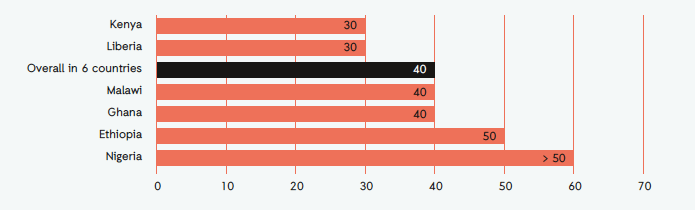
Similarly, in the health sector, 95% of Ethiopian health workers reported shortages of equipment and medicines due to insufficient budgets (Figure 2). As a consequence of budget cuts to health services, 90% of Ethiopian health professionals reported significant disruptions to maternity services, while all surveyed public health experts noted sharp increases in drug prices, with Ethiopia among the hardest hit.
Figure 2: Percentage of health workers reporting insufficient budget
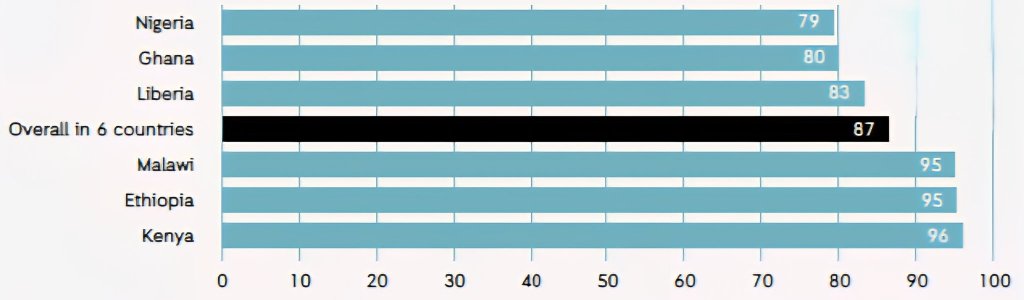
Additionally, across the surveyed countries, 97% of health workers said their salaries no longer cover basic living costs, exacerbated by growing workloads. In Ethiopia, 100% of healthcare workers reported insufficient pay, with 75% having to reduce their families food intake due to inadequate compensation (Figure 3), while 65% reported intention to leave their jobs.
Figure 3: Percentage of healthcare workers reporting reduced food intake for their families
These financial pressures and the inability to meet basic needs – compounded by public budget cuts and soaring workloads – have left 70% of teachers and 85% of health workers feeling overwhelmed, according to the report. This crisis has taken a significant toll on mental wellbeing, with 89% of teachers and 95% of health workers reporting stress linked to financial instability and excessive workloads.
During the past several months, the plight of underpaid and overworked healthcare professionals has led to mass strikes and demonstrations throughout Ethiopia.
Impacts of Public Budget Cuts on Public Services
A key pillar of IMF austerity is the slashing of government spending on public services, including health, education, and social safety net programs. In this regard, ActionAid’s research finds that cuts to public budgets have slashed essential funding to health, education, and infrastructure.
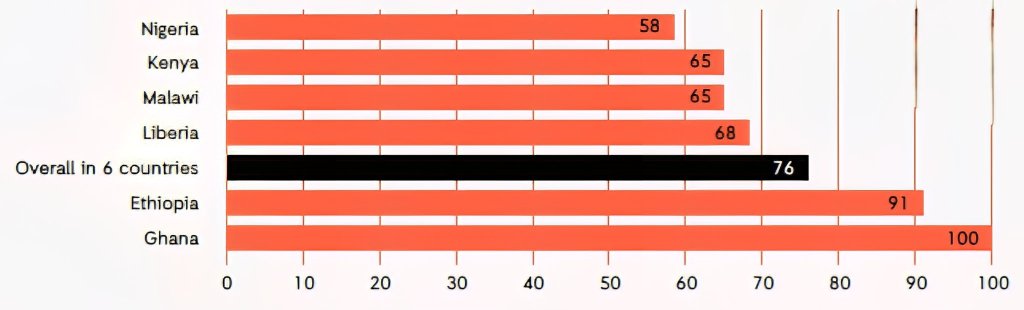
In the education sector, 87% of teacher respondents cite a shortage of essential classroom furniture and reduced access to teaching materials and 73% have had to purchase resources themselves. At the same time, across all countries, 76% of all teachers surveyed report a decline in overall working conditions (Figure 4) – the highest incidence of deteriorating working conditions were in Ghana (100%) and Ethiopia (91%).
Figure 4: Percentage of teachers surveyed reporting a deterioration in work conditions
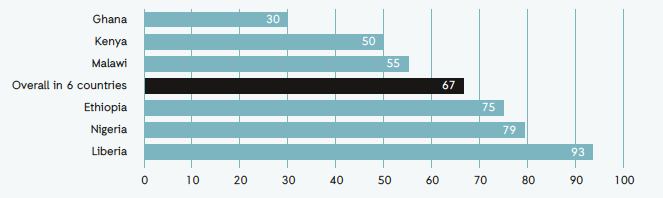
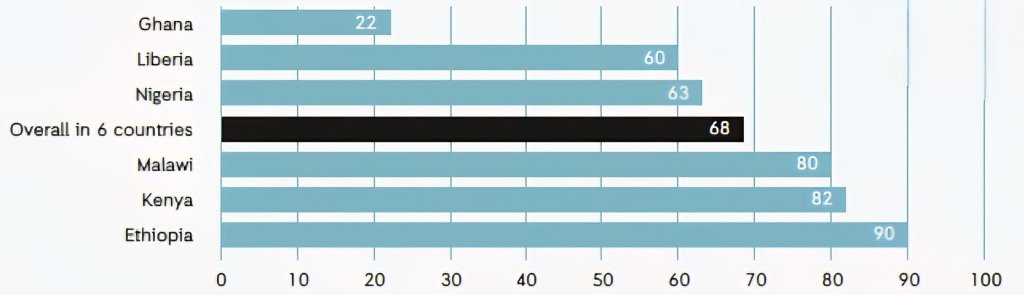
In the health sector, across all countries surveyed, 87% of health workers report a scarcity of medical equipment and supplies due to insufficient budgets, and 84% report severe shortages in staff, leading to longer wait times and a decline in service quality, particularly maternal health services. Specifically, 68% of health workers highlighted the adverse impact of budget cuts on maternal health services, with the impact on maternal health being particularly severe in Ethiopia, where 90% of workers reported significant challenges (Figure 5).
Figure 5: Percentage of healthcare workers reporting greatest impacts of budget cuts on maternal health
The consequences of cuts to government expenditure on public services are catastrophic, and the systemic failures caused are far-reaching. Ultimately, the strain on health workers and teachers jeopardizes service delivery, raises attrition risks, and compromises the wellbeing of workers and their families. This emphasizes the urgent need for reforms in pay, workloads, infrastructure, and training, to save these essential public services.
Concluding Remarks and Recommendations
In sum, the ActionAid research and report highlights the lived impact of the IMF’s austerity-driven cuts to the public budget and privatization, drawing on compelling new evidence of the chronic under-resourcing of health and education services in six African countries.
This is happening in the context of reductions in government expenditure and the prioritization of debt repayments, justified by the goals of IMF enforced economic liberalization, privatization, and gross domestic product (GDP) growth at any cost. In the current climate of aid cuts and geopolitical instability, this trend can only be expected to be exacerbated. Nonetheless, ActionAid warns that austerity-driven cuts risk deepening poverty, worsening inequality, and fueling social unrest.
In light of the dire state of public services, ActionAid urges the IMF to “stop imposing austerity measures and privatization, and focus instead on progressive tax reforms and debt relief or cancellation to increase government revenues for greater investment in public services”.
At the same time, ActionAid calls on national governments to “reject coercive IMF policies, seek debt relief or cancellation, and expand tax revenues in fair ways to rebuild public health and education workforces and infrastructure”.
To this end, education ministries are encouraged to collaborate with finance ministries to ensure that at least 20% of national budgets are allocated to education, in line with global benchmarks. Likewise, health ministries are encouraged to work with finance ministries to ensure the achievement of the Abuja Declaration benchmark of allocating 15% of national budget towards healthcare.

 Ethiopian Policy Institute