
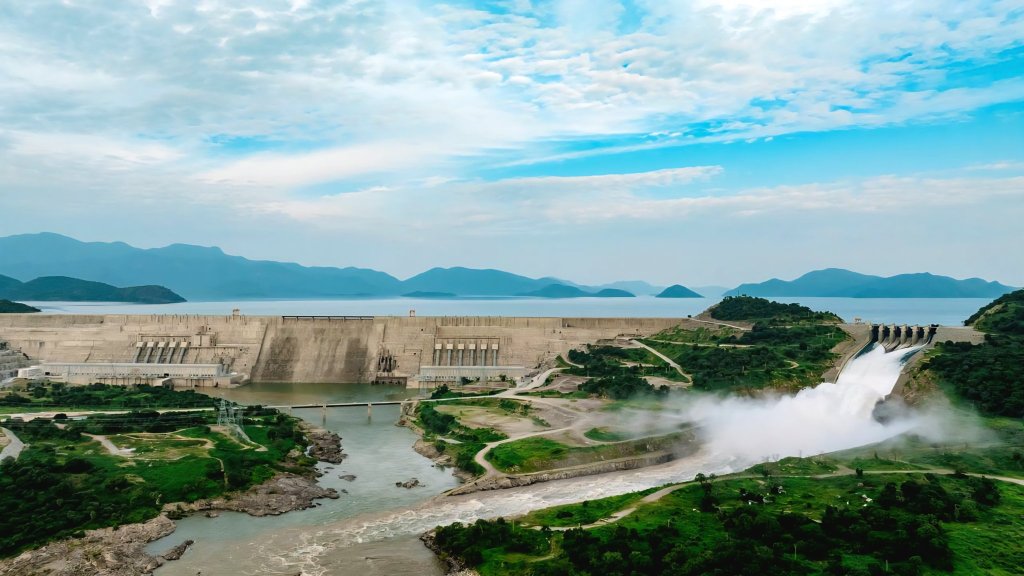
On Tuesday, September 9, 2025, Ethiopia inaugurated the Grand Ethiopian Renaissance Dam (GERD)—the largest hydroelectric dam in Africa. The culmination of years of sacrifice, dedication, and perseverance.
The 74-billion cubic meter dam took 14 years and an estimated $5 billion to complete. At full capacity, the dam is expected to generate 6,000 megawatts of electricity—powering not only Ethiopia, but its neighbors as well. Undoubtedly, the completion of the GERD is a monumental accomplishment and a significant milestone in Ethiopia’s socioeconomic development journey.
Access to electricity is foundational for socioeconomic development—transforming education, healthcare, business, and industry. To this end, the GERD’s energy output is expected to catalyze manufacturing and industrialization, enabling Ethiopia to move beyond an agrarian economy to an economically diversified, manufacturing-oriented development model. Such structural economic transformation will facilitate the creation of jobs, raising of incomes, alleviation of poverty, and expansion of the tax base.
Furthermore, the GERD’s capacity to deliver clean hydropower aligns seamlessly with the global goals of combating climate change and facilitating a clean energy transition. In doing so, the GERD is a profound illustration of Ethiopia’s drive to harness renewable energy and its commitment to advance a sustainable development model that alleviates dependence on fossil fuels. This strategic alignment can facilitate climate-friendly investments and green industry financing into Ethiopia, further accelerating national development goals.
When construction of the GERD began in 2011, international financial institutions (IFIs), international organization and development partners, declined to provide financial support—a consequence of Egypt lobbying to prevent Ethiopia from building the dam. Egypt, and to a lesser extent, Sudan have objected to the project—claiming that it would reduce water flows to the two downstream countries.
Nonetheless, with the filling of the GERD complete and its turbines operational, water flow has not decreased. Rather, both countries stand to benefit from the project. Egypt will gain access to electricity from Ethiopia, while Sudan will gain both electricity and regulated water flow which will improve the country’s agricultural productivity.
As a consequence of Egypt’s lobbying and IFIs refusal to support the project, the GERD became a truly national project—self-financed by Ethiopians through domestic revenue, government bonds, and significant financial contributions from citizens and the diaspora. As a result, the GERD is a testament to the unity, resilience, and ingenuity of the Ethiopian people.
Going forward, the GERD’s potential will be fully realized only if Ethiopia has peace, security and stability, and its leaders embrace inclusive governance and strategic development policy planning. In this regard, policies must ensure that domestic electricity needs are prioritized over the export of electricity. And the dam’s benefits must extend beyond urban centers and government pet projects to rural and underserved communities.
The GERD embodies the aspirations of a nation for energy security, sustainable socioeconomic development, and shared prosperity. A powerful symbol of how major development projects—through unity, wise leadership, and responsible stewardship—can unlock national potential, forge regional solidarity, and power a brighter future.
The GERD is not merely a dam—it is the foundation of a new era, the renaissance of Ethiopia and a beacon of hope for Africa’s ability to rise and thrive in the 21st century. The task ahead is immense, but so too are the opportunities and rewards for Ethiopians and their neighbors—if the journey is navigated with cooperation, unity, and wisdom.
 Ethiopian Policy Institute