
By: Henok Abebe1
Introduction
Ethiopia’s modern history is marked by repeated opportunities for transformation that were squandered at crucial moments. From the early twentieth-century reformist intellectuals to the student radicals of the 1960s, from the military leaders of the Derg to the ethnic elites of the Ethiopian People’s Revolutionary Democratic Front (EPRDF), and now under Abiy Ahmed’s regime, the promise of freedom and democracy has been undermined by authoritarianism.
While regimes bear the primary responsibility for repression, intellectuals, elites, and society have consistently failed to take the necessary actions to safeguard against authoritarianism. Intellectuals have too often aligned with rulers or chosen silence over truth, elites have sought power and privilege rather than reform, and society has remained dormant, fragmented, or unable to hold authority accountable. Some individuals across generations stood bravely for democratic change, but they were exceptions. The broader pattern is one of missed responsibility, complicity, and failure.
The Narrow Corridor: State and Society
Daron Acemoglu and James Robinson in their book titled “The Narrow Corridor: States, Societies and the Fate of Liberty”, contend that a leviathan (State) is not guaranteed to protect the people from anarchy, nor does the lack of a formally organized force always lead society into lawlessness. Nonetheless, according to the authors, “a strong state is needed to control violence, enforce laws, and provide public services that are critical for a life in which people are empowered to make and pursue their choices. A strong, mobilized society is needed to control and shackle the strong state.”
In other words, governments are formed to provide public services, including ensuring peace and security. Their power and ability to exercise authority—such as waging war, collecting taxes, or maintaining a police force—are drawn from the partial freedom of the people. Society must therefore shackle the state, lest the state take away all freedom by encroaching on the private sphere of individuals and by failing to provide the public services that justify its existence.
To achieve this, society should develop norms of accountability, mobilize collective action through protests, advocacy, electoral participation, and lobbying; while at the same time, utilizing cultural and religious institutions to hold the government accountable and demonstrate its collective strength. However, a predominantly illiterate society like Ethiopia is vulnerable and less capable of shackling the powerful hands of the State.
For instance, during the monarchy, popular grievances were not widespread, except in areas such as Gojjam, Bale, Tigray, and Raya, which focused on specific local issues and were typically met with repression. Urban populations participated in the 1960s protests against the monarchy, which emboldened students and intellectuals to strengthen their organizations and ultimately influenced the military Derg regime to take power and bury the monarchy.
Yet, the much larger rural society did not play a decisive role in the change of government until mobilized by groups like the Eritrean People’s Liberation Front (EPLF), Tigray People’s Liberation Front (TPLF), Ethiopian People’s Democratic Movement, and Oromo Liberation Front (OLF). The elites within these organizations convinced the public to align with them and used them as foot soldiers, whether to secede (EPLF) or to seize power (TPLF and its allies).
Ethiopian society as such did not collectively organize to shackle the Derg regime. This was partly because the people were predominantly uneducated and focused on subsistence, and partly because the intellectuals who could have enlightened and mobilized the masses were annihilated by the Derg, forced into exile, or driven into guerrilla struggle.
During the EPRDF era, the society showed limited political participation until the 2005 general election. At that point, the urban population and parts of the rural areas participated actively, hoping for a new government, constitutional order, and policies. But the brutal crackdown that followed, combined with the disintegration of the opposition and the authoritarian grip of Meles Zenawi, crushed that hope.
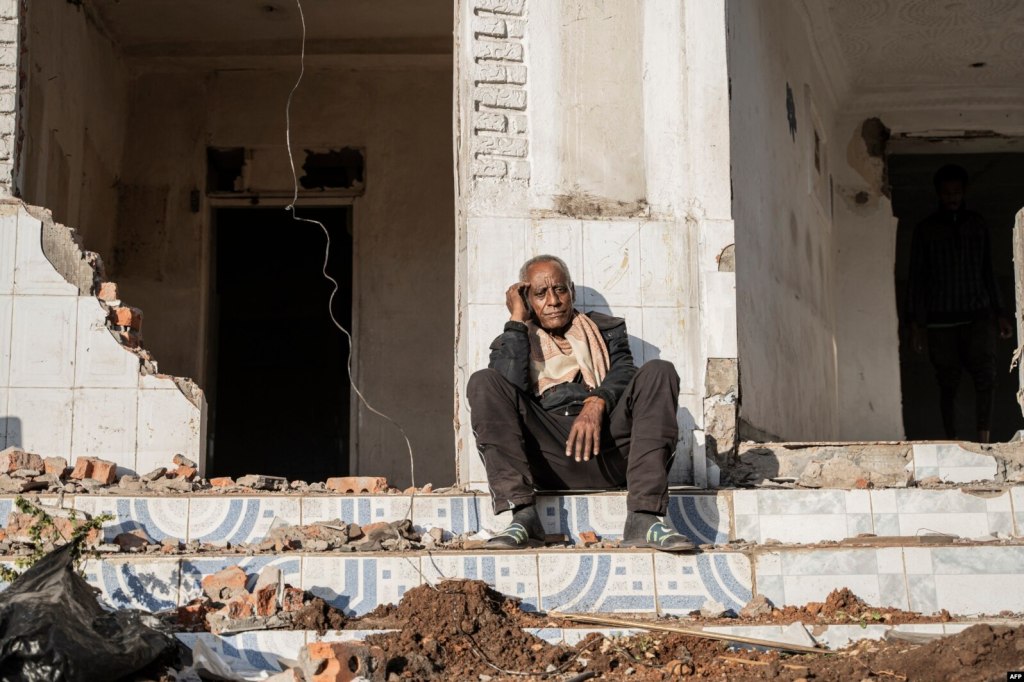
A similar silence now looms over Ethiopian society in the face of Abiy Ahmed’s authoritarianism. The people of Tigray fought against his authoritarian ambitions; the Amhara are now fighting against Abiy’s tyranny and in defense of their rights; and the OLF continues to mobilize its base against the regime; while a vast majority of the population remains silent. Despite successive wars, mass unemployment, inflation, corruption, misappropriation of resources, human rights violations, and a lack of credible hope for a democratic transition, Ethiopian society has not sufficiently mobilized to hold Abiy and his regime accountable.
The Ethiopian public, in my observation, has not sufficiently mobilized itself to fight against tyranny and oppression—and in defense of freedom and democracy.
In years past, the military mobilizations under ethnic liberation fronts were largely orchestrated by elites. The popular movement during the 2005 elections, though remarkable, was smaller than the mobilization that supported the EPRDF. And today, even those who resist the Abiy regime do not necessarily believe that freedom and democracy are the final destination.
In Ethiopia, in most cases, those in power are feared and even revered. The public often obeys whatever the government dictates, while fearing to align with opposition forces. In the social media era, we can also see where popular attention lies: not on national dialogue, transitional justice, democracy, corruption, unemployment, or inflation, mass failure of students in national exams, but rather on trivial matters such a as rumors, gossip, and distractions around celebrities and moral controversies.
Unfortunately, many citizens do not believe it is necessary—or even their right—to oppose, criticize, lobby, or hold the government accountable. This could be due to an awareness gap, repeated betrayals of earlier hopes, the trauma of past and current political violence, or deep divisions along ethnic and religious lines that prevent trust and collective action.
Whatever the reasons, one principle remains: freedom and democracy emerge and endure only when society is mobilized, actively participates in politics, and holds the government accountable. For this to happen, the role of intellectuals and elites is immense.
Intellectuals and Elites
Before discussing the role of intellectuals and elites in society’s quest for freedom and democracy, it is important to establish a working definition.
Intellectuals are those who, through formal education and exposure to new ideas, possess the capacity to analyze, interpret, and critique the political, social, economic, and cultural order of society. In the Ethiopian context, this category includes writers, teachers, academics, diplomats, and individuals serving in higher positions within government and the private sector, most often with a university degree or above, who are positioned to articulate visions for shaping and transforming society.
Elites are those who possess influence, power, or wealth, whether in politics, the military, the aristocracy, religion, the arts, media, or the business community. There is often an overlap between elites and intellectuals: intellectuals may become state officials or influential figures in public life, while elites may acquire education and use it as a resource to strengthen their dominance.
During the imperial period, those who could be categorized as intellectuals—whether through formal education in local schools, studying abroad, or training in religious institutions—were frequently at the helm of power and reinforced the monarchy’s rule. The imperial rulers themselves were shaped by the prevailing educational system of the time, especially church education.
During the Derg regime, although a few members had university training (Addis Tedla and Birhanu Bayeh), most, including the leader, Mengistu Hailemariam, had barely finished high school. The intellectuals who survived the brutal purges—both Mengistu’s killings and the internecine violence among rivals—largely submitted to the regime and became intellectual elites serving the Derg.
Under the EPRDF, those who rose to power from the armed struggle lacked the intellectual and educational background to be considered intellectuals in the conventional sense, including Meles Zenawi, who had left university as a freshman in the 1970s. These leaders, however, educated themselves while in power, gathered obsequious intellectuals around them, and created their own network of educated and uneducated elites.
A similar pattern continues under the Abiy regime. Abiy, whose educational record remains dubious, has managed—by persuasion, manipulation, coercion or cruelty—to rally millions of mediocre cadres and secure the support of elites in the media, art, business, and academia.
In a country where the majority of the population is illiterate and has limited access to information, elites and intellectuals hold a special role and responsibility in shaping the life and governance of society. Intellectuals, in particular, should articulate a clear and inspiring vision of democracy and freedom by interpreting complex ideals, adapting them to the national context, and persuading elites—who control resources and wield influence—to act upon these ideas. In doing so, they can help build enduring democratic institutions such as constitutions, civil society organizations, independent media, courts, human rights institutions, electoral commissions, and effective systems of governance.
The normative role of intellectuals and elites in any society is to act as guardians of freedom, justice, and democracy. They are expected to critique the excesses of rulers, propose reforms that enshrine rights and accountability, mobilize the public toward civic participation, and mediate between the governing and governed. Where they succeed, societies democratize and freedom expands. Where they fail—whether through fear, silence, opportunism, or complicity—authoritarianism flourishes, injustice deepens, and societies remain trapped in cycles of repression.
Power entices those who hold it unless checked and balanced. Therefore, intellectuals and elites must utilize public platforms—including social media, mainstream media, religious institutions, songs, plays, theater, and film—to raise awareness about rights and responsibilities, and to emphasize the necessity of scrutinizing and challenging those in authority. During periods of political transition, elites and intellectuals act as bridges—or more precisely, as power brokers—between society and the ruling authorities. They must press those in power to make concessions in favor of the public interest, especially in the areas of freedom and reform.
Beyond pressuring leaders, intellectuals and elites are also tasked with shaping society into an active citizenry: one that embraces pluralism and diverse opinions, holds the government accountable, enforces its rights through legal means, and participates meaningfully in elections. Only in this way can democracy be consolidated and safeguarded against backsliding.
Moreover, intellectuals and elites serve not only as mediators between government and society, but also as channels through which knowledge, ideas, and resources flow. Through translation, collaboration with international institutions, and engagement with the experiences of other countries, they can adapt democratic concepts to local realities. They can also mobilize diplomatic support, secure aid, and channel external resources to benefit the public.
As Bahiru Zewde has observed in his article “The Intellectual and the State in Twentieth-Century Ethiopia”, the history of Ethiopian intellectuals can be divided into three epochs: the period of Gebrehiwot Baykedagn (1900–1935), Girmame Neway (1941–1960), and Tilahun Takele (1970–1994, the time of his writing).
Nevertheless, the intellectuals of the Derg and EPRDF deserve separate treatment, since their regimes had peculiar features, even though intellectual behavior followed the same broad patterns: silence in the face of injustice, service to the ruling elites for personal gain, or complicity in consolidating ethnic federalism.
A further epoch must also be added for the intellectuals of Abiy Ahmed’s era. Despite differences in regime and historical context, the intellectuals and elites have consistently displayed similar behavior: a few resisting authoritarianism and working for reform, some remaining silent in pursuit of private interests in academia or international organizations, and the majority aligning with those in power, thereby crushing the public’s hopes for democracy and freedom.
Intellectuals and Elites Under the Monarchy
The early generation of reformist intellectuals emerged in the first decades of the twentieth century. Inspired by the Meiji Restoration in Japan, some advocated “Japanization” as a model for Ethiopia’s modernization. Their ideas influenced the adoption of Ethiopia’s first written constitution in 1931. Yet, this project was abruptly interrupted by the Fascist Italian invasion, which decimated Ethiopia’s educated class—many were killed, imprisoned, or forced into exile, some accompanying Emperor Haile Selassie abroad.
Among the most visionary thinkers of the early 20th Century was Gebrehiwot Baykedagn. His Mengistna Yehizb Astedader (State and Public Administration), published posthumously in 1924, remains strikingly relevant. He urged the separation of royal and state revenues, rational taxation, freedom of worship, modernization of the army, the creation of schools, and the rationalization of the legal code. Decades later, Girmame Neway—educated at Madison and Columbia—showed rare courage by attempting to dismantle Ethiopia’s feudal landholding and governance system through a coup d’état. Though his effort failed and cost him his life, it underscored the frustration of intellectuals who saw modernization blocked by entrenched privilege.
Gebrehiwot and Girmame shared a vision of modernization through westernization. During the imperial period, figures such as Gebrehiwot Baykedagn, Teklehawariat Teklemariam, and Haddis Alemayehu pursued reforms in governance and administration but always within the framework of the monarchy.
In his 1912 book Atse Menelik and Ethiopia, Gebrehiwot proposed “separation of royal and state revenue, institution of a fixed tax, commutation of dues, opening of schools, rationalization of the legal code, modernization of the army, introduction of a uniform currency, centralization of customs administration, and freedom of worship”. These reforms were only implemented after his death, under Haile Selassie.
Similarly, Teklehawariat drafted the 1931 Constitution, envisioning the rule of law, limited imperial authority, and a representative parliament. Yet, the emperor heavily revised the draft to maintain his preeminence.
Others took bolder steps. Girmame Neway attempted a coup, while Ambassador Birhanu Dinke resigned from his post in the United States in protest. In his resignation letter to Haile Selassie, Birhanu urged the emperor to “relinquish the out-of-date claim of divine right, revise the constitution and make it more adaptable to a democratic form of government, allow political parties, [and] subscribe to the concept of popularly elected government without regard to religion or ethnic origin.”
Aside from a few such cases, most educated elites submitted themselves to the monarchy and its one-man rule. If intellectuals ignored the plight of their people, it was hardly surprising that non-educated elites, who controlled wealth and influence, cared even less about popular welfare.
Many of those educated abroad at the Emperor’s expense returned to serve the monarchy rather than challenge it. They contributed to drafting the 1955 Constitution and another aborted constitutional project late in Haile Selassie’s reign. Yet, like the 1931 document, these texts failed to truly guarantee rights, empower citizens, or curb imperial authority.
To their credit, these intellectuals and elites helped establish critical institutions: Ethiopian Airlines, national radio and television, modern schools, Addis Ababa University, and various legal codes all emerged in this period. But political power remained tightly centralized, poverty persisted among both farmers and urban dwellers, and citizens had neither elections nor enforceable rights. The monarchy remained a one-man show, cloaked in constitutional form but devoid of democratic substance.
Revolution and the Derg
During the Derg regime, the Tilahun Takele generation of intellectuals expedited change but lost control of it to the military. What began as an opportunity for democratic transition was seized by low-ranking soldiers who lacked vision, education, and experience—turning Ethiopia into a military dictatorship.
Some intellectuals collaborated with the Derg regime through the Office of Public Organization (Yehizb Dirjit Giziyawi Tsihifet Bet) or retreated into silence; while others, like the Ethiopian People’s Revolutionary Party, tried to resist and called for civilian government.
The result was catastrophic: the regime unleashed terror against intellectuals, while internal divisions and the “White Terror” weakened the opposition from within, making it easier for the Derg to annihilate them. Intellectuals killed one another’s leaders, leaked information to the junta, or fell into disarray. The guerrilla groups, meanwhile, deepened the ethnicization of politics and prolonged the war.
The intellectuals who most authentically sought to improve governance were those who struggled against the imperial regime, contributing to its overthrow, and continued to oppose the military takeover of the government. The 1960 coup attempt led by Girmame and Mengistu Neway sought to establish a more Western-style democratic Ethiopia, but ultimately failed, in part because intellectuals and elites did not coalesce behind it. However, Girmame’s vision of Westernization later resurfaced in another attempt to overthrow the government—this time steering the country toward socialism.
Many who joined the military junta in 1974 legitimized and strengthened its dictatorship rather than resisting it. Instead of fostering open public debate about Ethiopia’s future, they allowed socialism to be adopted wholesale as a panacea, dismissing alternative paths such as a mixed economy or gradual liberalism as “reactionary.” Major Atnafu Abate, who believed a mixed economy was better suited to Ethiopia, was executed.
Except for a few who rejected the Provisional Military Administrative Council and called for a popular government, the majority of intellectuals and elites aligned themselves with the Derg and helped Mengistu consolidate his authoritarian rule. Those who resisted were killed or forced into exile, often joining the guerrilla fronts. The few who remained inside the country either assisted the regime in terrorizing the population or kept silent out of fear for their own lives and those of their families.
Meanwhile, those who fought the regime through guerrilla warfare inflicted a different kind of harm—bleeding the country as opposition. Some succeeded in separating Eritrea, others imposed an ethnic-based federalist system, and still others, like the OLF, waged ethnic violence against Amhara population. Much like the elites who had once bolstered Haile Selassie, the Derg-era intellectuals and elites also served the dictator, whether through complicity, silence, or opportunism.
The failure of intellectuals to articulate alternative visions and insist on public debate was disastrous. Instead of shepherding Ethiopia toward freedom and democracy, they enabled soldiers with little governance experience or ideological clarity to dominate. As later memoirs of Derg members reveal, they scarcely understood Marxism-Leninism, the system of governance, and international reality, yet intellectuals lent them legitimacy and provided ideological justification. Those who opposed were killed, forced into exile, or turned to guerrilla fighting. In the process, Ethiopia was dragged into 17 years of civil war, terror, and repression, culminating in the rise of the TPLF and the secession of Eritrea.
The EPRDF and Ethnic Federalism
The fall of the Derg regime in 1991 opened another window of opportunity. The EPRDF institutionalized ethnic federalism, and the 1995 constitution enshrined civil, political, socio-economic, and even third-generation rights. On paper, in terms of human and democratic rights, Ethiopia ostensibly had one of the most progressive constitutions in Africa. In practice, however, elections were a sham, rights were ignored, and dissent was crushed.
Intellectuals and elites failed once more. Instead of building cross-ethnic alliances to demand genuine freedom and democracy, they splintered along ethnic lines. Some became junior partners of the TPLF, extracting resources and power through patronage. Others, associated with past regimes, were marginalized, forced into exile, or silenced into private life. Civil society remained too weak to challenge authoritarian rule.
The EPRDF period represents yet another moment when intellectuals could have pressured the regime toward democratization but chose instead to align, divide, or remain silent. The idea of self-determination for nations and nationalities was not wrong in itself, nor was the demand for cultural and linguistic rights. However, framing Ethiopia as a colonial empire and enshrining secession as a constitutional right led to the loss of Eritrea and Ethiopia’s coastline. Ethnic federalism entrenched divisions, portraying Amharas as oppressors and undermining the very fabric of national unity. The elites and intellectuals who justified or tolerated these choices bear responsibility for Ethiopia’s continuing fragmentation and turmoil.
Abiy Ahmed, Syncretic Authoritarianism, Ungoverning, and Patrimonialism
The rise of Abiy Ahmed in 2018 was greeted with optimism. The retreat of the TPLF provided another chance at democratization. Yet, this chance, too, was squandered. Instead of steering Ethiopia toward freedom and democracy, Abiy consolidated power at the center while leaving much of the periphery ungoverned. His regime embodies what Berihun Gebeyeh has recently termed “syncretic authoritarianism”: a blend of military force, legal manipulation, and appeals to international legitimacy.
Furthermore, Abiy’s administration is marked by patrimonialism and patronage. He cultivates loyalty by distributing land, offices, projects, and jobs, without transparency. He manipulates ethnic and religious divisions, presenting himself as a mediator and even a messiah amid chaos. At the same time, he prioritizes vanity projects—palaces, resorts, parks—over basic services, jobs, rural development, and infrastructure. Wars in Amhara, Tigray, and Oromia testify to his reliance on violence rather than consent.
In the face of this, Ethiopia’s intellectuals and elites have again failed. Only a handful openly oppose Abiy’s authoritarianism. Most align with him, justify his failures, or remain silent, while pursuing personal advancement. Religious leaders, business elites, artists, and scholars have not mobilized to resist authoritarianism or demand accountability. Instead, they accommodate the regime, leaving society unrepresented and vulnerable.
The contemporary elites and intellectuals of Ethiopia have placed themselves in the service of Abiy and his tyranny–a dynamic is captured powerfully by Anne Applebaum in Twilight of Democracy: The Seductive Lure of Authoritarianism.
According to Applebaum, “In ancient Rome, Caesar had sculptors make multiple versions of his image. No contemporary authoritarian can succeed without the modern equivalent: the writers, intellectuals, pamphleteers, bloggers, spin doctors, producers of television programs, creators of memes who can sell his image to the public. Authoritarians need the people who will promote the riot or launch the coup. But they also need the people who can use sophisticated legal language, people who can argue that breaking the Constitution or twisting the law is the right thing to do. They need people who will give voice to grievances, manipulate discontent, channel anger and fear, and imagine a different future. They need members of the intellectual and educated elite, in other words, who will help them launch a war on the rest of the intellectual and educated elite, even if that includes their university classmates, their colleagues, and their friends.”
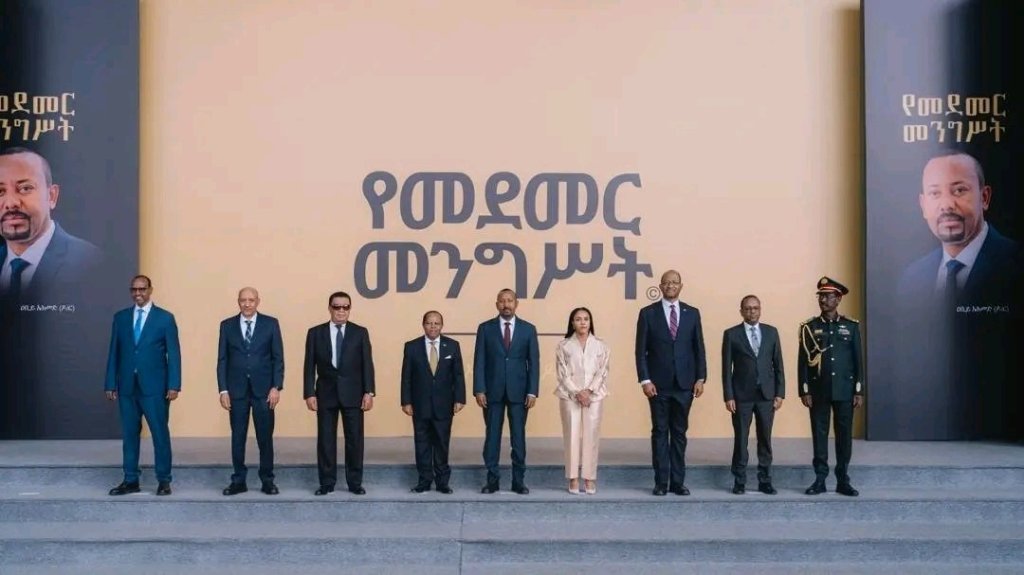
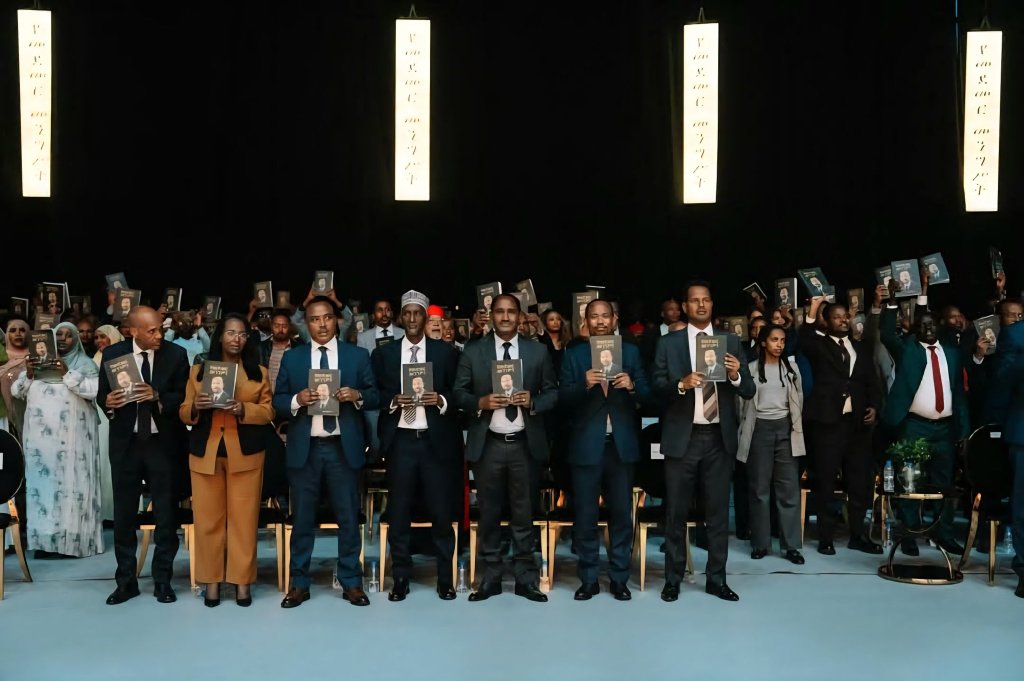
In Abiy’s Ethiopia, people ranging from Daniel Kibret to Dagnachew Assefa, Gedion Timotheos to Mamo Mihretu, Eyob Tekalign to Hana Areyasilassie, Birhanu Nega to Belete Mola, Solomon Kassa to prominent media personalities, Nebeyou Baye to Abel Mulugeta, and even from Christian to Islamic religious leaders—all are playing their part in selling Abiy’s image. They justify their wars against their own people, use legal interpretation and intellectual sophistry to rationalize undermining the Constitution, twisting laws, and turning the law itself into an instrument of authoritarian rule.
These intellectuals and elites, who voluntarily submitted themselves to power, have waged war: a war of armies, a war of poverty and displacement, a war of mass unemployment and inflation—waged not only on the public but on their own classmates, colleagues, and friends. These myopic groups, ensconcing themselves on the shoulders of an impoverished mass, have failed their country, their society, and, if they have one, their own conscience.
Conclusion
In Ethiopia, across regimes, the pattern is clear. Intellectuals and elites have too often chosen silence, complicity, or opportunism over responsibly advancing freedom, democracy, and the public good. A few brave figures have stood as exceptions–sacrificing much for rights and freedoms. Yet, the majority served rulers, prioritized ethnic or personal interests, or simply withdrew into private life. Ethiopia society, fragmented and fearful, has failed to hold successive governments accountable.
As a result, authoritarianism has recycled itself in new forms: imperial absolutism, military dictatorship, ethnic federalism, and now syncretic authoritarianism. Until intellectuals speak truth to power, elites commit to reform over privilege, and society mobilizes for justice and accountability, Ethiopia’s long quest for freedom and democracy will remain unfinished.
***
- About the Author: Henok Abebe is a human rights advocate who regularly shares his views through various media outlets and online opinion pieces. He holds a Bachelor of Laws (LL.B.) from Addis Ababa University, a Master of Laws (LL.M.) from Central European University, and a Master of Science (M.Sc.) from Georgia Southwestern State University. ↩︎

 Ethiopian Policy Institute