
The U.S. State Department’s 2025 Ethiopia Investment Climate Report, published in September 2025, paints a grim picture of the investment and business climate in Ethiopia under the Abiy Ahmed regime.
The report highlights persistent structural challenges, including economic, political, and security challenges as impediments to investing and doing business in Ethiopia.
While noting that the Abiy regime is undertaking a liberalization and privatization agenda, the report highlights that the regime is unable to address numerous challenges hindering the economy, including:
- Inability to attract foreign investment;
- Low tax base;
- Re-emerging gap between the official and parallel foreign exchange rates;
- Inability to protect property rights;
- Inability to improve customs procedures;
- Inadequate infrastructure and logistics systems;
- Inability to stamp out corruption; and
- Inability to strengthen the rule of law.
Consequently, Ethiopia’s foreign direct investment inflows were a meager 2.7% of gross domestic product (GDP) in 2024, down from 7% of GDP in 2017.
Deteriorating Investment Climate
The U.S. State Department notes that Ethiopia’s investment climate is increasingly challenging for U.S. and other foreign businesses due to:
- Internal conflict, notably in the Amhara and Oromia regions;
- Restrictions on travel; and,
- Frequent expropriation of assets by either corrupt regime officials or members of armed groups, with the Abiy regime having limited ability to intervene.
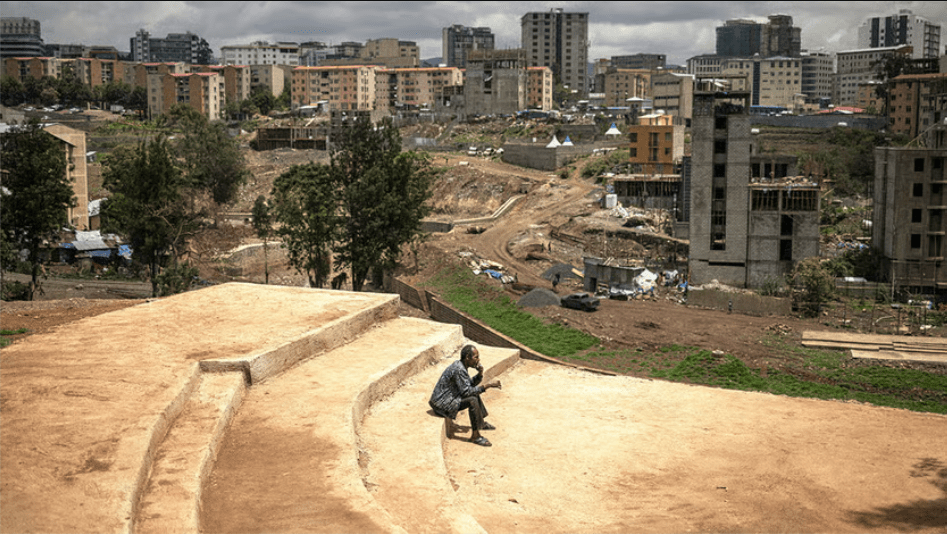
Furthermore, the State Department asserts that the Abiy regime’s “insufficient protection of property rights, most prominently demonstrated by a series of “corridor development” projects in which the [Abiy regime] expelled tens of thousands of residents and businesses – including foreign-owned ones – and demolished their properties with little to no warning or compensation, deter investor interest.”
While some attempts ostensibly aimed at improving the investment climate have been undertaken, including passing an investment law in 2020, opening previously restricted state-owned entities and sectors, and liberalizing the exchange rate regime, significant and enduring challenges remain, such as:
- Conflict throughout the country, particularly in the Amhara and Oromia regions;
- Rising political tensions in Tigray that threaten a return to conflict;
- Weak property rights;
- A re-emerging gap between the official exchange rate and the parallel market rate, contributing to persisting foreign currency shortages;
- Excessive and questionable taxation of foreign businesses;
- Regulatory uncertainty especially in customs enforcement;
- Poor infrastructure and logistics; and,
- A system that favors state owned enterprises (SoEs).
Expropriation Under the Pretext of “Corridor Development”
According to the State Department’s report, the Abiy regime is utilizing the so-called “corridor development” as a vehicle for the expropriation of land and businesses from locals and international investors. Specifically, the report notes the following:
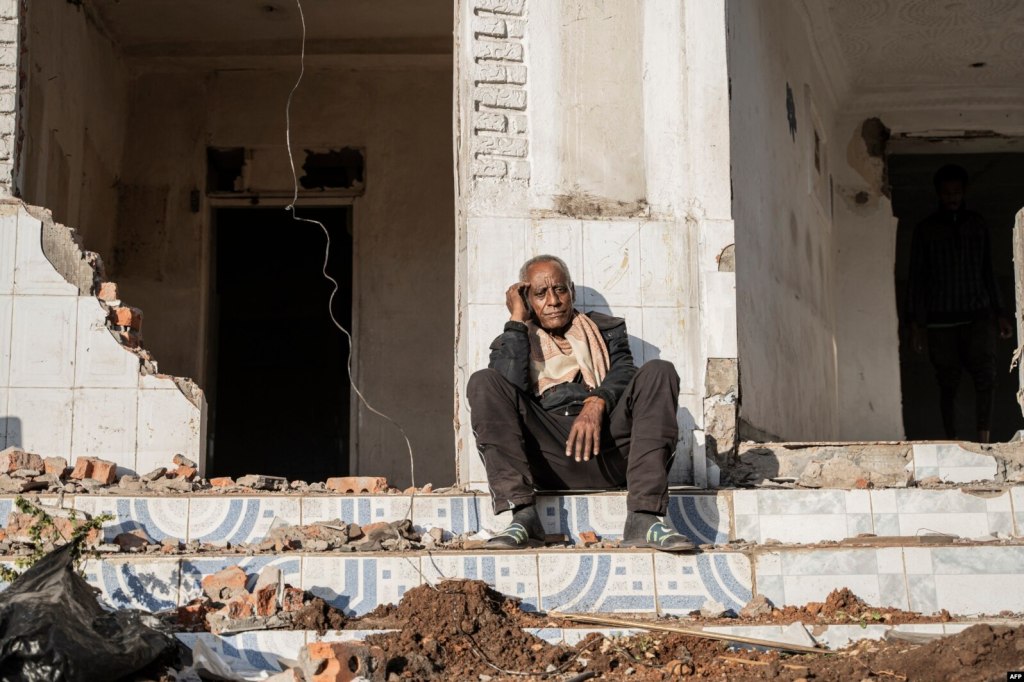
In March 2024, Prime Minister Abiy and the Addis Ababa city administration initiated a “corridor development” project, in which the Government of Ethiopia expelled tens of thousands of residents and businesses – including foreign-owned ones – and demolished their properties with little to no warning or compensation. Foreign-owned businesses reported some of these displacements occurred with no warning at all and at gunpoint.
Since land is publicly owned in Ethiopia, investors lease rather than own land, which enables authorities to reclaim land for public use or revoke leases under regulatory pretexts. The corridor development projects also tore up roads in front of businesses, making operation impossible and driving them out of business even if the business itself was untouched. Some foreign and local investors have reported sudden, large tax assessments or retroactive tax claims without adequate transparency or due process, significantly reducing profitability and constituting a form of indirect expropriation.
Deteriorating Political and Security Environment
The report highlights that ethnic-based conflicts continue to proliferate driven by “historical grievances, resource competition, land disputes, and the ethno-federalist constitutions that ties political agency to ethnic identity.” Due to political instability and insecurity, “the U.S. travel advisory remains Level 3: Reconsider Travel due to unrest, crime, and risk of expropriation”, highlights the U.S. State Department.
Since May 2023, the Abiy regime has waged a full-fledged war on the Amhara region—deploying heavy weaponry, mechanized military units, and combat drones. At the same time, fighting between the Oromo Liberation Army and the Abiy regime is ongoing in parts of the Oromia region. While, political tensions and the risk of conflict reigniting in the Tigray region continues to increase.
Consequently, during the last seven years, under the Abiy Ahmed regime, due to poor governance, economic mismanagement, and the proliferation of armed conflict:
- 73% of the population is mired in multidimensional poverty with an additional 18% on the cusp of multidimensional poverty;
- Poverty is rapidly rising in every region of the country;
- Over 21 million people need emergency humanitarian aid;
- 4.7 million Internally Displaced Persons need humanitarian assistance, including food, shelter, and hygienic services;
- 5,500 schools have closed due to conflict and instability, of which 4,178 are in the Amhara region;
- More than 9 million school-aged children are currently out of school. In Amhara region, only 2.3 million students are enrolled for the current academic year out of 7 million school-aged children; and,
- Media and civic space is severely restricted, if not closed, with frequent harassment and detentions of journalists, activists, and opposition figures.
Conclusion
In conclusion, the U.S. Department of State’s 2025 Investment Climate Report on Ethiopia highlights the Abiy regime’s attempts to attract FDI through the adoption of a liberalization and privatization agenda.
However, the investment and business climate is deteriorating due to political instability and armed conflict; structural macroeconomic imbalances; chronic foreign currency shortages; a widening gap between the official and parallel foreign exchange rates; the proliferation of corruption; and unclear regulatory environments. Additional challenges include weak property rights; poor infrastructure and customs procedures; and excessive taxation on foreign businesses.
 Ethiopian Policy Institute