
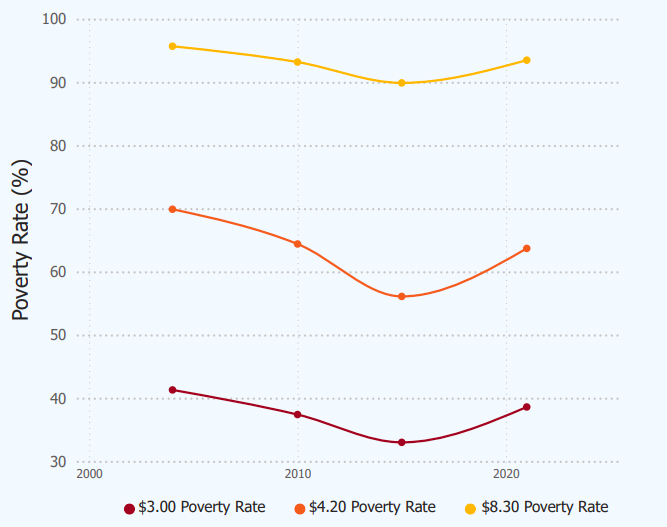
The World Bank’s latest assessment on poverty and equity in Ethiopia (PDF) forecasts that poverty will increase to 43% by 2025, up from 33% in 2016 (measured at $3 per day, 2021 PPP).
After making significant strides in poverty reduction for over two decades; in recent years, Ethiopia is experiencing internal and external challenges that are exacerbating poverty. Consequently, according to the World Bank, due to conflict, climate shocks, declining GDP growth, and soaring inflation, poverty rates rose sharply from 33% in 2016 to 39% in 2021, with expectations of further increases in upcoming years.
Figure 1: Poverty Rate (Ethiopia)
Multidimensional Poverty Increasing
Multidimensional poverty, a broader measure of well-being encompassing income, education and health, has increased sharply in recent years. Ethiopia’s population that is multidimensionally poor increased from 68% in 2019 to 72% in 2024, with an additional 18% susceptible to multidimensional poverty.
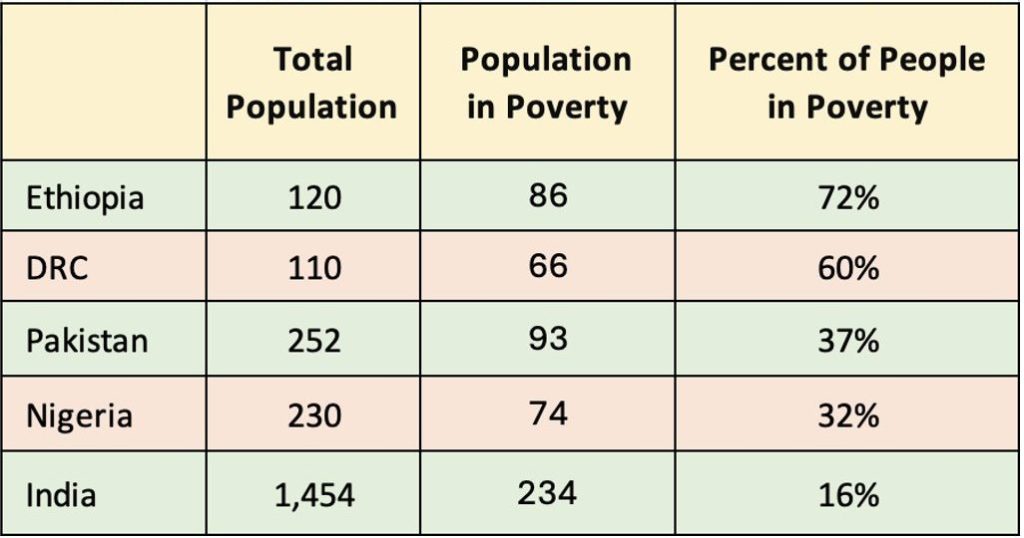
More specifically, of Ethiopia’s 120 million population, 86 million are in multidimensional poverty — a staggering 72% — the highest percentage of a population in multidimensional poverty in the world (Figure 3).
Additionally, of the 86 million in multidimensional poverty, 50% are children, according to the latest report by the United Nations Development Programme and Oxford University’s Poverty and Human Development Initiative.
Figure 2: Poverty at Different Lines (2001)
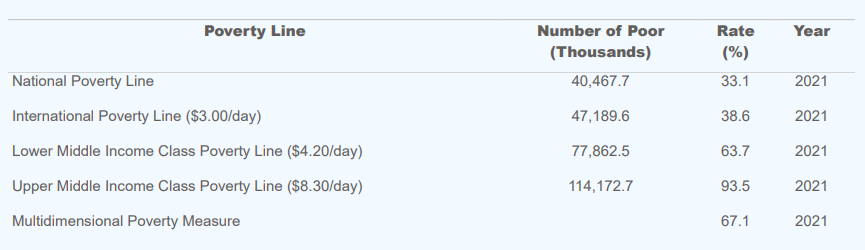
Figure 3: Global Multidimensional Poverty Index 2024 (Millions)
Human Capital Deteriorating
According to the World Bank, “human capital indicators in Ethiopia remain alarmingly low, especially in rural regions” — a finding emblematic of the broader deterioration of productive capacities undermining Ethiopia’s socioeconomic development in recent years.
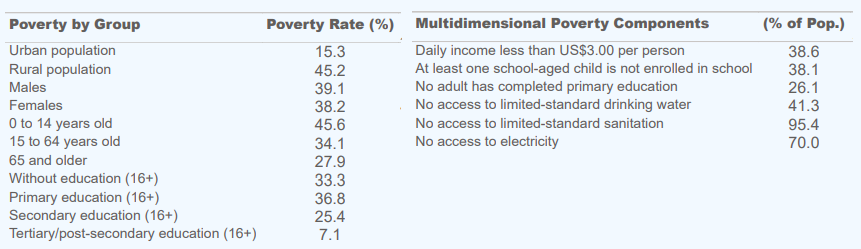
For instance, in 2021, 86% of rural adults had not completed primary education, while nearly half of rural households had at least one stunted child, and over a quarter reported having a severely stunted child.
Furthermore, disparities in access to public services by income are stark, with sanitation facilities and electricity connections being nearly three to four times more prevalent in the top 20% of the country than in the bottom 20%. The poorest households often experience isolation from markets and public services and are disproportionately affected by climatic shocks and food shortages.
Figure 4: Poverty by Group and Components
In this context, public sentiment on the economy continues to be negative, with an overwhelming majority of Ethiopians (72%) expressing “disapproval” of how the economy is being managed — as unemployment, inflation, poverty and inequality continue to undermine living standards. By 2025, poverty is projected to escalate to 43%, says the World Bank.
 Ethiopian Policy Institute